
Hertzliya Property Market Report Q3 2025 Analysis
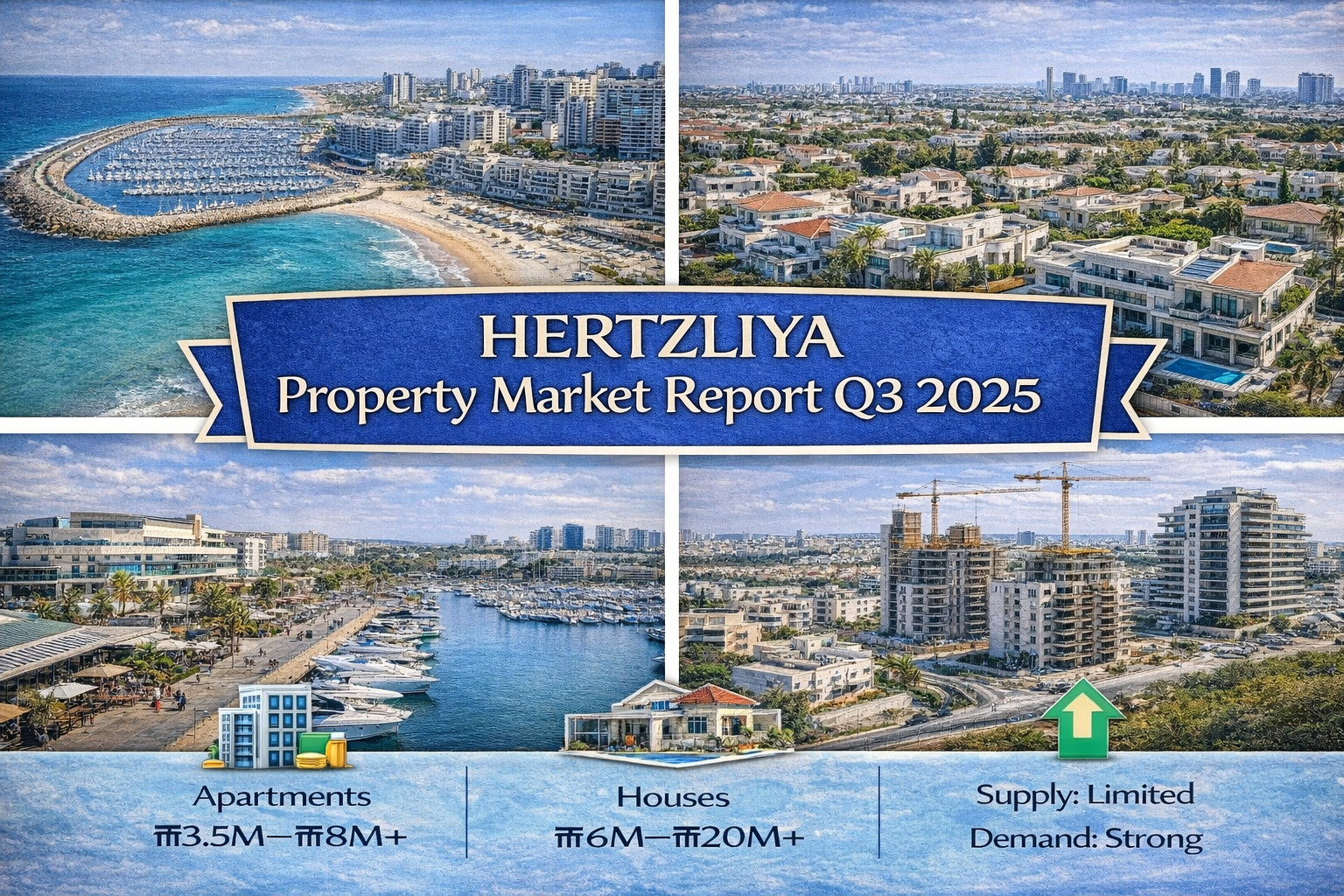
Herzliya stands as Israel's quintessential luxury coastal city, a municipality of approximately one hundred thousand residents that has successfully positioned itself as the country's premier address for affluent buyers seeking Mediterranean lifestyle combined with proximity to Tel Aviv's employment and cultural opportunities. The city's property market in Q3 2025 demonstrated remarkable resilience amid broader national corrections, with average prices reaching 3.66 million shekels according to Central Bureau of Statistics data, representing only a 4.2 percent annual decline compared to Q3 2024—the most stable performance among Israel's major expensive markets and dramatically outperforming Tel Aviv's steep 13 percent correction. This exceptional relative strength reflects Herzliya's unique positioning as scarce coastal premium product serving Israel's wealthiest buyers, whose financial capacity provides insulation from affordability pressures affecting broader markets dependent on mortgage-constrained purchasers.
The quarterly price movement from Q2 to Q3 2025 showed remarkable stability with only 0.05 percent decline, essentially flat performance suggesting that Herzliya has already absorbed most correction pressures and reached equilibrium pricing where buyers and sellers agree on values reflecting current market realities. This stands in stark contrast to most Israeli markets experiencing continued quarterly softening as prices adjust to elevated interest rates maintained at 4.5 percent by the Bank of Israel throughout the period. Herzliya's resilience stems from multiple reinforcing factors including limited geographic scale creating structural supply constraints, exceptional coastal positioning with premium marina and beach infrastructure, established reputation as Israel's luxury address attracting aspirational buyers, and buyer demographics skewing toward cash-rich purchasers less sensitive to mortgage cost fluctuations affecting leverage-dependent segments.
Geographic positioning creates Herzliya's fundamental competitive advantage, with the city occupying prime coastal real estate just twelve kilometers north of Tel Aviv, providing genuine beach proximity combined with convenient access to Israel's primary employment center through multiple transportation corridors. Highway 2, the main coastal route, enables Tel Aviv commutes of fifteen to twenty-five minutes depending on traffic conditions and specific destinations, making Herzliya viable for daily commuters while offering suburban quality and coastal lifestyle impossible within Tel Aviv proper at comparable price points. The coastal train line provides alternative commuting option with regular service connecting Herzliya to Tel Aviv, Haifa, and intermediate stations, creating public transportation accessibility supplementing the car-oriented mobility patterns dominant in Israeli suburban markets. This proximity differential compared to more distant coastal alternatives like Netanya or Hadera creates value justification for Herzliya's premium pricing, as buyers pay for convenience and time savings that translate to improved quality of life through reduced commuting stress and enhanced work-life balance.
The marina infrastructure in Herzliya represents perhaps the city's single most distinctive asset, creating lifestyle amenities and visual character unmatched elsewhere in Israel and justifying premium positioning relative to other coastal cities lacking comparable nautical infrastructure. The Herzliya Marina accommodates hundreds of private vessels ranging from modest sailboats to luxury yachts, creating Mediterranean resort atmosphere with waterfront restaurants, cafes, boutique shops, and promenade areas that function as signature public spaces attracting residents and visitors. Properties with direct marina views command substantial premiums over non-waterfront locations, creating clear price gradients where apartments overlooking the harbor sell for thirty to fifty percent more than comparable inland units just blocks away, reflecting buyers' willingness to pay for unobstructed water vistas and proximity to marina lifestyle amenities. The marina development transformed formerly industrial waterfront into luxury residential and commercial destination, creating value appreciation that established Herzliya's reputation as Israel's premier coastal lifestyle address while providing ongoing amenity base supporting property values across surrounding neighborhoods.
Neighborhood segmentation in Herzliya reflects both the city's evolution and its luxury positioning, with distinct areas serving different affluence levels while maintaining overall premium character distinguishing even Herzliya's most accessible neighborhoods from typical Israeli suburban markets. Herzliya Pituach, the coastal luxury district, represents Israel's ultimate prestige address where modern high-rise towers, beachfront villas, and marina-adjacent developments command prices ranging from 5.0 to 15.0 million shekels and dramatically higher for exceptional penthouses and waterfront estates, attracting Israel's wealthiest residents including technology entrepreneurs, senior corporate executives, entertainment celebrities, and international buyers seeking premier Israeli real estate exposure. The Old City area, Herzliya's historic core, offers more accessible entry points at 2.5 to 4.0 million shekels while maintaining quality standards and convenient access to commercial districts, appealing to affluent professional families seeking Herzliya address without extreme luxury pricing. The eastern neighborhoods including Neve Amal and Ramat Hasharon border areas provide additional mid-market options at 2.8 to 3.8 million shekels, though still representing premium pricing by national standards despite being Herzliya's most affordable segments.
Property type composition in Herzliya Pituach emphasizes luxury apartments in modern high-rise developments offering full-service amenities, with three to five-room units dominating transaction volumes while exceptional penthouses and private villas constitute smaller but highly significant luxury segment. Standard four-room apartments in quality Pituach buildings typically range from 5.5 to 8.0 million shekels depending on floor level, sea views, and building prestige, representing entry-level luxury segment for affluent buyers establishing Herzliya presence. Five-room units and larger apartments extend from 7.0 to 12.0 million shekels, serving established wealthy families seeking spacious accommodations with full amenity packages including pools, fitness centers, concierge services, and premium finishes throughout. Penthouses with expansive terraces, private pools, and panoramic Mediterranean views command 15.0 to 30.0 million shekels and higher, competing with private villas as ultimate luxury product attracting Israel's ultra-wealthy and international buyers seeking showcase properties. Private homes and waterfront villas represent scarce product given limited remaining development sites, with exceptional properties exceeding 40.0 million shekels creating transactions that set benchmarks for Israel's most expensive residential real estate.
The rental market in Herzliya demonstrates robust activity serving diverse tenant populations including corporate executives on assignment, diplomatic personnel, entertainment industry professionals, and affluent families in transition between property purchases. Standard four-room Pituach apartments typically rent for 12,000 to 18,000 shekels monthly with marina views and luxury buildings commanding upper ranges, reflecting premium positioning that filters tenant pool to high-income professionals and corporate-sponsored assignments. Five-room properties and luxury apartments rent for 18,000 to 30,000 shekels and higher, serving ultra-affluent tenants and senior corporate placements where rental budgets reflect executive compensation packages rather than typical household income constraints. Penthouses and exceptional properties generate monthly rents exceeding 40,000 shekels in some cases, though this extreme luxury segment operates more through private networks and corporate arrangements than traditional rental markets. Gross rental yields in Herzliya typically range from 2.5 to 3.0 percent, lower than national averages but reflecting the city's premium purchase prices and the trade-off between capital appreciation potential and current income generation characterizing luxury markets where buyers prioritize asset appreciation and lifestyle value over rental cash flow.
Technology sector dynamics profoundly influence Herzliya property demand given the concentration of high-tech employment in the city and surrounding areas, with numerous technology companies, startup offices, and corporate research facilities creating local employment base reducing Tel Aviv commute dependence for many residents. The Herzliya Industrial Zone and technology parks host major Israeli and international technology firms providing high-income employment supporting luxury property demand, while the broader ecosystem of venture capital, professional services, and technology-adjacent industries creates economic foundation distinguishing Herzliya from purely residential suburbs lacking independent employment bases. The global technology industry volatility during 2022-2024, including mass layoffs and reduced venture funding, created uncertainty affecting high-income employment levels among the professional class driving luxury property demand, though Herzliya's established affluence and diversified wealthy population provided partial insulation from worst-case scenarios. Any sustained technology sector recovery would likely benefit Herzliya property values disproportionately given the correlation between tech sector health and capacity to afford luxury housing, creating potential upside scenarios if global technology markets stabilize more quickly than currently anticipated.
Educational infrastructure in Herzliya offers quality options across secular and religious streams, though the city's luxury positioning means families prioritize location and lifestyle over pure educational excellence compared to Ra'anana or Modi'in where schools drive primary demand. The municipality operates comprehensive networks serving diverse populations with generally strong academic performance, while private schools and international programs provide alternatives for families seeking specific pedagogical approaches or English-language instruction. The Herzliya Hebrew Gymnasium and other prestigious institutions maintain strong university placement records supporting property values through educational quality associations, though most Herzliya buyers select the city primarily for coastal lifestyle and prestige rather than exceptional schools being decisive factor. For ultra-affluent families, private education budgets allow attending top institutions regardless of residence location, reducing school proximity as primary purchase consideration compared to middle-class buyers where public school quality critically affects neighborhood selection.
Healthcare access in Herzliya benefits from proximity to major Tel Aviv medical centers while maintaining local clinics for routine care, creating comprehensive medical coverage appropriate for affluent population with expectations of immediate access to premium healthcare services. Private medical practices supplement public health offerings for residents preferring concierge-style medicine and minimal wait times, creating mixed healthcare ecosystem common in wealthy communities where willingness to pay for premium service exceeds typical Israeli healthcare consumption patterns. The Herzliya Medical Center provides private hospital services catering to international patients and affluent Israelis seeking premium care environments, contributing to city's luxury positioning beyond pure residential real estate. The healthcare infrastructure, while not unique to Herzliya, represents important baseline quality supporting the city's appeal to wealthy retirees and families prioritizing immediate access to comprehensive medical services.
Commercial infrastructure in Herzliya combines upscale shopping, fine dining, professional services, and luxury retail creating commercial ecosystem matching the city's residential affluence and supporting property values through neighborhood vitality. The Arena Mall and other shopping centers provide comprehensive retail with international brands, entertainment options, and dining venues serving affluent consumers expecting selection and quality exceeding typical Israeli suburban retail. Restaurant corridors particularly in Pituach feature fine dining establishments, beachfront cafes, and international cuisine options creating vibrant commercial character and lifestyle amenities justifying residential premiums. Professional services including legal, accounting, wealth management, and real estate firms cluster in Herzliya serving local wealthy population and regional clientele, creating employment base and commercial depth distinguishing the city from purely residential suburbs. The commercial ecosystem both serves and attracts affluent residents, creating virtuous cycle where retail follows wealth which attracts more retail creating neighborhood-level amenity density supporting property values.
Parks and beach infrastructure in Herzliya extend beyond the signature marina to include extensive coastal access, recreational facilities, and green spaces creating quality of life amenities supporting luxury positioning. Multiple beach access points provide public coastal entry with lifeguard services, amenities, and maintenance standards appropriate for premium city expecting superior public infrastructure. The Apollonia National Park preserves ancient ruins and coastal nature providing recreational hiking and historical tourism complementing beach-oriented activities. Municipal parks throughout residential neighborhoods offer playgrounds, sports facilities, and open spaces supporting family recreation needs. The infrastructure investment reflects municipal commitment and resident expectations for premium public amenities justifying high property taxes and supporting values through tangible quality of life benefits extending beyond private property boundaries.
Market dynamics in Q3 2025 position Herzliya as Israel's most resilient luxury market, with the 4.2 percent annual decline representing meaningful correction but dramatically outperforming all comparable expensive markets including Tel Aviv's 13 percent drop and positioning Herzliya as safe haven for wealthy buyers seeking stable values during uncertain markets. The quarterly stability with only 0.05 percent Q2 to Q3 decline suggests the city has reached equilibrium pricing where current values reflect buyer-seller consensus incorporating elevated interest rates, geopolitical uncertainties, and broader market corrections into realistic assessments. Transaction volumes likely declined consistent with luxury market patterns where activity slows during uncertainty but wealthy buyers maintain financial capacity to transact when properties match requirements, creating markets characterized by fewer but higher-quality transactions compared to broader markets experiencing volume collapses from affordability crises. The correction primarily affects properties purchased during 2023-2024 peak pricing, while longer-term owners retaining substantial equity remain insulated from near-term movements, creating bifurcated market where recent purchasers face potential losses if forced to sell while established owners maintain flexibility to hold awaiting recovery.
Interest rate policy from the Bank of Israel maintaining rates at 4.5 percent throughout Q3 2025 affects Herzliya differently than broader markets given the city's buyer demographics skewing heavily toward cash purchasers and low-leverage buyers less sensitive to mortgage cost fluctuations. While elevated rates constrain marginal Herzliya buyers requiring significant leverage to afford entry-level properties, the core luxury segment operates predominantly through cash transactions or minimal leverage where five percent mortgage costs represent manageable expense rather than affordability barrier. For a typical four-room Pituach apartment priced at 7.0 million shekels, a wealthy buyer might finance only 2.0 million shekels after contributing 5.0 million shekel down payment, creating monthly payments of approximately 11,700 shekels on the leveraged portion—easily manageable for buyers with household incomes exceeding 100,000 shekels monthly or substantial wealth allowing comfortable debt service. This leverage profile differs dramatically from typical Israeli buyers financing seventy-five percent of purchase prices and facing severe affordability constraints from elevated rates, explaining Herzliya's resilience when mortgage-dependent markets experience steep corrections.
The supply environment in Herzliya remains constrained by limited geographic scale and restrictive development policies prioritizing neighborhood character preservation over aggressive densification, creating structural scarcity supporting values during market corrections by preventing inventory overhang problems affecting markets with extensive development pipelines. New construction occurs primarily through selective luxury projects replacing older buildings or developing remaining available sites, with development focused on premium product matching Herzliya's luxury positioning rather than mid-market units that would dilute the city's exclusivity. This supply discipline maintains scarcity value supporting prices, though it also limits options for buyers seeking modern construction with contemporary amenities and safety features, creating market dynamics where new luxury developments command substantial premiums over existing inventory given limited alternatives. The resulting supply constraint favors sellers relative to locations with abundant new inventory, creating more balanced negotiating positions even during broader market weakness when buyers theoretically gain leverage from reduced competition.
Investment perspectives on Herzliya property require analyzing the city's value proposition as scarce luxury product serving Israel's wealthiest buyers, with investment considerations balancing modest rental yields against appreciation potential from structural scarcity and growing wealth concentration among global Jewish populations. For ultra-wealthy buyers prioritizing lifestyle over financial returns, Herzliya represents Israel's ultimate residential address where purchase decisions reflect desire for premier property and prestige positioning rather than yield optimization or speculative appreciation expectations. For affluent investors seeking Israeli real estate exposure with capital preservation priorities, Herzliya's stability during market downturns and structural supply constraints create defensive characteristics potentially justifying lower yields through superior risk-adjusted returns when accounting for downside protection. The 2.5 to 3.0 percent gross yields appear unattractive compared to mid-market properties generating 3.5 to 4.0 percent returns, but Herzliya's appreciation potential from wealth effects and scarcity dynamics may generate superior total returns over extended holding periods when combining modest income with capital gains, though this requires patient capital capable of long-term commitments.
For prospective buyers considering Herzliya purchase decisions, current market conditions create unusual opportunities to acquire luxury product at prices reflecting 4.2 percent correction from peak valuations, representing meaningful absolute savings on multi-million shekel transactions though still requiring substantial capital given Herzliya's premium positioning. Strategic buyers should prioritize properties offering specific location advantages such as marina views, direct beach access, or superior building amenities, as these attributes supported values during corrections better than generic locations lacking distinctive appeal and will likely lead recovery when markets stabilize. The minimal quarterly price movement suggests Herzliya has largely absorbed correction pressures and established new equilibrium, reducing timing risk for buyers concerned about purchasing before market bottoms compared to markets still experiencing monthly declines creating ongoing uncertainty. Financing pre-approval remains important even in luxury segment where cash transactions dominate, as sellers favor buyers demonstrating clear capacity to close and may discount offers lacking financial certainty even when headline prices appear competitive.
Sellers in Herzliya face more favorable positioning than most Israeli markets given the city's relative price stability and continued demand from wealthy buyers seeking scarce luxury product, though realistic pricing reflecting 4.2 percent correction from peaks remains essential to generating serious buyer interest. Properties priced appropriately for current conditions typically attract showing activity and generate offers within reasonable timeframes given Herzliya's limited inventory and sustained demand from affluent buyers, while overpriced listings risk extended marketing periods as luxury buyers demonstrate sophisticated valuation capabilities and willingness to wait for appropriate opportunities rather than overpaying for urgency. The temptation to maintain aspirational pricing based on 2024 peaks risks opportunity costs if broader markets continue softening or if personal circumstances eventually necessitate sales at less favorable terms, though Herzliya's stability reduces these risks compared to volatile markets where delays create substantial value erosion. Strategic sellers should invest in premium property presentation including professional staging, high-quality photography emphasizing lifestyle elements, and marketing targeting appropriate buyer pools including international wealthy buyers and technology sector executives whose wealth positions them to afford Herzliya luxury product.
The international buyer segment deserves specific attention given its importance to Herzliya market dynamics and unique characteristics differentiating these purchasers from typical domestic buyers. North American and European Jewish buyers frequently purchase Herzliya properties as part-year residences, investment diversification, or establishing Israeli foothold for family members, creating transactions where immediate occupancy is not required and properties serve multiple purposes beyond pure housing. The strong shekel against major currencies during portions of 2024-2025 affects foreign buyer calculations significantly, with currency movements sometimes overwhelming property price changes in determining relative value for international investors assessing all-in costs in home currencies. Geopolitical developments and diaspora community sentiment toward Israel influence foreign investment flows in ways difficult to predict through traditional economic analysis, creating both risks and opportunities as these considerations evolve. The new immigrant tax benefits providing substantial purchase tax reductions for qualifying buyers create powerful financial incentives supporting demand from this segment, effectively reducing acquisition costs by hundreds of thousands of shekels on typical Herzliya transactions and improving net returns for buyers meeting eligibility requirements.
Security considerations, heightened following October 2023 events and subsequent regional tensions, increasingly influence buyer preferences with properties featuring protected rooms commanding measurable premiums over units lacking these safety features, though Herzliya's central location and distance from border areas provides relative security advantages compared to northern or southern cities facing more direct threats. The municipality's emergency preparedness infrastructure and responsive local government create confidence among residents that security challenges will be managed professionally, supporting market stability during geopolitical stress when less secure locations experience sharper corrections. International buyers particularly sensitive to security dynamics given less familiarity with Israeli security realities benefit from Herzliya's established safety record and central positioning when making purchase decisions incorporating both lifestyle and security assessment dimensions, with many wealthy diaspora buyers viewing Herzliya as optimal balance between Israeli presence and risk management given the city's geography and affluent character attracting premium municipal services.
Environmental and sustainability considerations increasingly influence Herzliya property values as coastal location creates both amenities and vulnerabilities related to climate change and sea level rise concerns that sophisticated buyers incorporate into long-term valuation analyses. The marina development and beachfront properties face potential exposure to rising seas and increased storm intensity, though engineering standards and ongoing maintenance create resilience exceeding typical coastal properties in less affluent municipalities lacking resources for premium infrastructure protection. Energy efficiency in luxury properties takes on particular importance given large unit sizes and premium finish expectations creating substantial cooling and operating costs, with modern buildings incorporating advanced climate control systems and insulation standards reducing electricity consumption compared to older luxury properties with less efficient systems. Green building certifications and sustainable design elements create marketing advantages and tangible operating cost benefits that sophisticated buyers value, particularly among younger wealthy buyers more attuned to environmental considerations than older generations focusing purely on luxury and prestige.
Taxation and transaction cost considerations significantly impact net investment returns in Herzliya properties as in all Israeli real estate, with purchase taxes, legal fees, and agency commissions on multi-million shekel transactions creating absolute costs reaching hundreds of thousands of shekels though remaining percentage-equivalent to smaller transactions. The purchase tax structure applies higher marginal rates to luxury properties, with transactions above certain thresholds facing ten percent taxation on incremental value, creating tax bills potentially exceeding one million shekels on the most expensive Herzliya properties and requiring sophisticated tax planning to optimize structures within legal frameworks. The new immigrant benefits capping at six million shekels provide less proportional advantage for ultra-luxury Herzliya purchases above this threshold, though still offering meaningful savings for qualifying buyers on typical four to five-room Pituach apartments falling within benefit limits. Annual property taxes remain modest by international luxury standards but vary based on property size and amenity level, with larger properties and premium buildings facing higher absolute amounts while rates remain reasonable relative to property values and buyer wealth levels.
Building maintenance and homeowner association dynamics in Herzliya luxury developments involve sophisticated governance structures and substantial monthly fees reflecting premium amenities and service expectations appropriate for affluent resident populations. Fee levels in luxury Pituach buildings typically range from substantial amounts to extreme levels depending on amenity packages, with full-service developments offering concierge services, pools, fitness centers, landscaped grounds, and premium common area finishes requiring monthly fees potentially reaching several thousand shekels or more per unit to fund operating budgets covering personnel, maintenance, insurance, and reserve contributions. Coastal properties face particular maintenance challenges from salt air exposure and marine environment requiring more frequent exterior maintenance, corrosion prevention, and specialized materials than inland locations, creating higher building costs that translate to elevated monthly fees buyers should carefully evaluate during due diligence. The quality of building management critically affects daily life quality and property values in luxury segment where residents expect professional service and proactive maintenance, with well-run buildings maintaining better physical condition, resident satisfaction, and values compared to poorly managed properties where disputes and deterioration reduce desirability even in premium locations.
Future development prospects in Herzliya remain constrained by limited available land and political dynamics where existing residents resist aggressive densification threatening neighborhood character and creating infrastructure strain, though selective luxury projects will continue on remaining development sites and through replacement of aging buildings. The municipality's master planning emphasizes quality over quantity, prioritizing sustainable growth that maintains Herzliya's luxury character rather than maximizing development density that might generate tax revenue but diminish the exclusivity supporting premium property values. Transportation infrastructure improvements including potential light rail connectivity and highway expansions could enhance Herzliya's accessibility and values, though the city already enjoys excellent Tel Aviv connectivity reducing marginal benefits from further improvements compared to more distant municipalities where enhanced access creates transformative value changes. The limited development pipeline supports long-term scarcity value creation, as growing wealth among potential buyers encounters fixed luxury housing supply creating classic scarcity dynamics that historically drive luxury real estate appreciation independent of broader economic cycles.
Demographic projections suggest Herzliya will continue attracting Israel's wealthiest residents while facing political pressures around socioeconomic exclusivity and affordable housing provision that may create modest inclusionary development requirements, though these pressures are unlikely to fundamentally alter the city's luxury character given entrenched political economy favoring current resident interests. The aging of wealthy residents may create lifecycle transitions as retirees downsize from large homes to luxury apartments or relocate to assisted living, potentially increasing inventory of certain property types while creating demand for senior-appropriate configurations, though these transitions typically occur gradually through private sales rather than creating sudden market disruptions. Immigration of wealthy diaspora members should continue providing buyer flows supporting Herzliya's international character and luxury positioning, particularly as global Jewish wealth concentrates among successful technology entrepreneurs, financial professionals, and inheritors of substantial family wealth seeking Israeli real estate exposure for diversification, emotional connection, and potential future residence.
Comparison to alternative luxury markets helps contextualize Herzliya's value proposition and relative pricing within competitive landscape of Israeli premium real estate. Tel Aviv luxury neighborhoods including specific towers and prestige addresses compete directly with Herzliya Pituach for ultra-wealthy buyers, with relative pricing depending on specific micro-locations and property characteristics rather than simple city-level comparisons, though Herzliya generally offers superior coastal access and marina lifestyle while Tel Aviv provides urban cultural amenities and walkable density appealing to different buyer preferences. Caesarea represents alternative luxury coastal destination targeting similar demographics, with private community structure and exceptional golf course amenities creating different lifestyle proposition at comparable or higher price points depending on specific properties, appealing to buyers prioritizing privacy and exclusive community over Herzliya's larger scale and commercial depth. Ra'anana and other affluent suburban markets operate at lower price points serving wealthy professional families rather than ultra-rich, creating distinct market segment with limited direct competition to Herzliya's luxury positioning.
Looking forward, Herzliya's property market trajectory through late 2025 and into 2026 appears positioned for continued stability relative to broader markets, with the city's fundamental strengths including coastal scarcity, luxury positioning, wealthy buyer demographics, and structural supply constraints providing resilience during uncertain times while limiting upside potential absent dramatic positive catalysts. Buyers with substantial wealth, long time horizons, and desire for premier Israeli coastal property can approach Herzliya with reasonable confidence that current values reflect realistic assessment incorporating known risks while offering Israel's highest-quality luxury residential product, though those seeking maximum appreciation potential or high current yields should recognize Herzliya's positioning as stable luxury rather than high-growth opportunity. Sellers benefit from Herzliya's relative stability and continued luxury demand, though must balance realistic pricing with property quality and marketing sophistication, recognizing that luxury buyers demonstrate patience and discernment requiring professional presentation and appropriate positioning to attract serious interest and competitive offers.
Herzliya emerges from this analysis as Israel's premier luxury coastal city offering scarce premium product serving the country's wealthiest buyers, with market dynamics in Q3 2025 demonstrating exceptional resilience through only 4.2 percent annual decline and near-zero quarterly movement when most markets experienced continued steep corrections. The city serves buyers prioritizing luxury coastal lifestyle, marina amenities, proximity to Tel Aviv, and prestige positioning over value optimization or yield maximization, delivering tangible quality justifying premium pricing to those capable of affording entry into Israel's most exclusive residential market. For ultra-wealthy seeking Israeli real estate exposure, international buyers establishing premium residences, and affluent families prioritizing ultimate coastal lifestyle, Herzliya represents compelling proposition despite elevated absolute costs, as the city delivers on its luxury promises in ways that less expensive alternatives cannot match. The market ultimately rewards those who value what Herzliya specifically offers—scarce luxury coastal living in Israel's premier address—and possess financial capacity to pay appropriate premiums for attributes the city uniquely provides.