
Netanya Property Market Report Q3 2025 Analysis
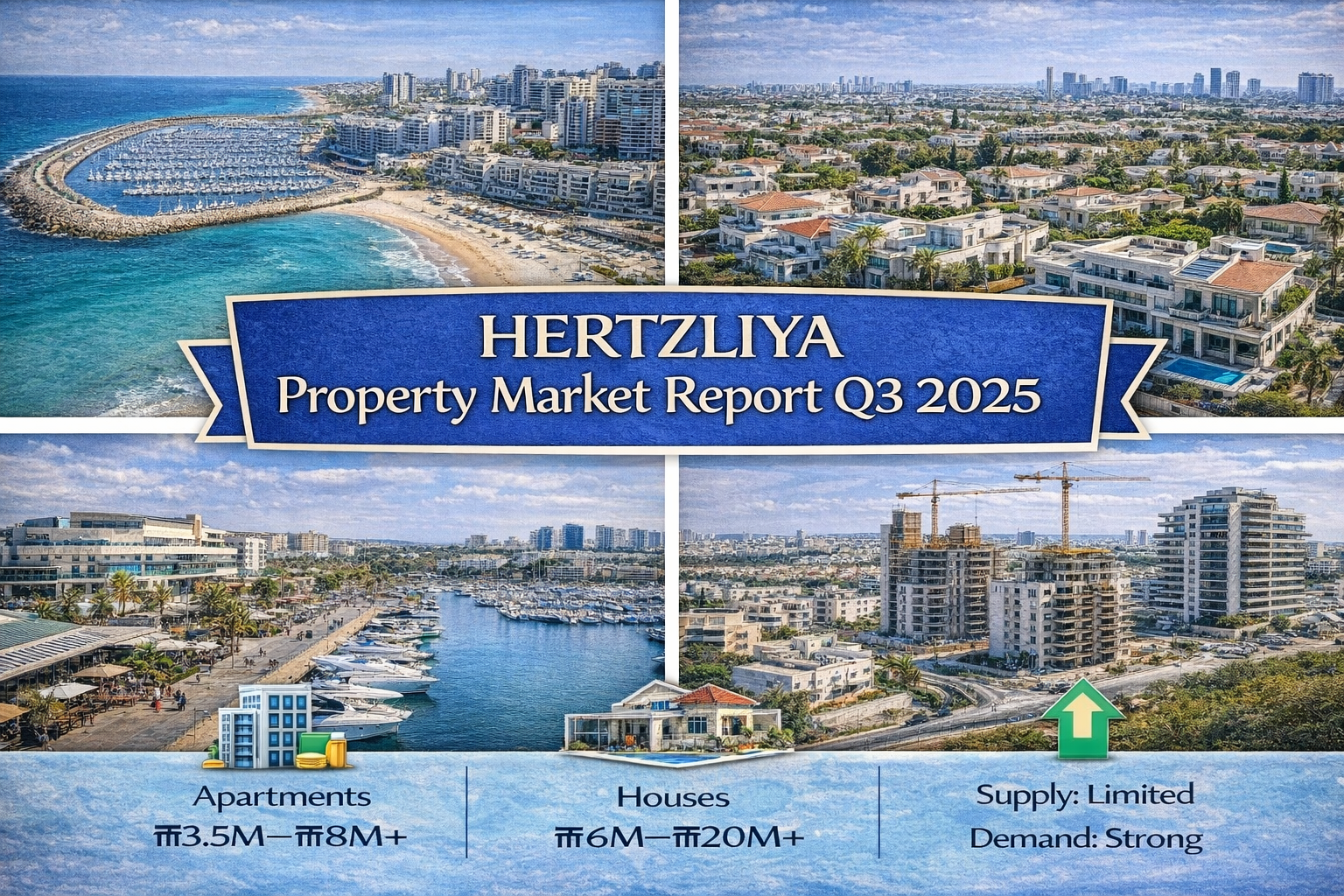
Netanya, Israel's premier coastal city in the Sharon region, occupies a unique position in the national property market as a city that successfully bridges multiple market segments—serving simultaneously as a family residential destination, retirement haven, tourist center, and increasingly popular alternative to Tel Aviv's escalating costs. With a population exceeding two hundred thousand residents, Netanya ranks as Israel's ninth-largest city, stretching along fourteen kilometers of Mediterranean coastline featuring some of the country's finest beaches, dramatic cliff-top promenades, and coastal infrastructure that creates lifestyle amenities justifying the city's positioning as a premium coastal alternative to more expensive Tel Aviv and Herzliya markets.
The property market in Netanya during Q3 2025 demonstrated the complex dynamics affecting Israeli coastal cities, with average prices reaching 2.568 million shekels according to Central Bureau of Statistics data, representing a 6.2 percent annual decline compared to Q3 2024 but maintaining relatively strong positioning within the national market hierarchy. This correction, while substantial in absolute terms, appears moderate compared to Tel Aviv's steeper 13 percent annual decline and positions Netanya as experiencing price adjustments that reflect broader market forces while avoiding the most severe corrections affecting markets with acute oversupply or fundamental demand challenges. The quarterly movement from Q2 to Q3 2025 showed continued softening as prices adjusted to elevated interest rates maintained at 4.5 percent by the Bank of Israel throughout the period, creating mortgage costs averaging approximately five percent that constrained buyer affordability and qualification capacity across all market segments.
Netanya's geographic positioning creates competitive advantages that support property values through multiple dimensions of appeal extending beyond pure residential functionality. The city's location thirty kilometers north of Tel Aviv positions it within commuting distance of Israel's primary employment center while offering substantially lower entry costs—creating value arbitrage opportunities for buyers willing to accept longer commute times in exchange for better housing quality or lower absolute costs compared to Tel Aviv alternatives. Highway 2, the main coastal route, provides direct access to Tel Aviv with typical commute times of forty to fifty minutes depending on traffic conditions and specific destinations, a manageable daily journey for many professionals though longer than the twenty to thirty minute commutes from closer-in municipalities like Ra'anana or Ramat Hasharon. The coastal train line offers an alternative commuting option with regular service connecting Netanya to Tel Aviv, Haifa, and intermediate stations, creating public transportation accessibility unusual in Israeli suburban markets where car dependency typically dominates mobility patterns.
The city's beach infrastructure represents perhaps its single most distinctive asset, creating lifestyle value that differentiates Netanya from inland municipalities and justifies premium positioning relative to non-coastal alternatives. The promenade stretching along the clifftops above Netanya's beaches provides dramatic Mediterranean views, recreational walking and cycling routes, and social gathering spaces that function as the city's signature public realm amenity. Multiple beach access points via elevators and staircases connect the upper city to beach level, where extensive sandy beaches, seasonal lifeguard services, and developed tourism infrastructure create family-friendly coastal access superior to many Israeli beach cities where geography or development patterns limit public beach availability. Properties with direct sea views command substantial premiums over inland locations, creating clear price gradients where apartments overlooking the Mediterranean sell for twenty to thirty percent more than comparable units just blocks inland, reflecting buyers' willingness to pay for unobstructed water vistas and the associated lifestyle experience.
Neighborhood segmentation in Netanya reflects the city's evolution from modest agricultural settlement to major coastal city, with distinct areas serving different demographic groups and price points while maintaining overall market coherence. The coastal neighborhoods including Ir Yamim and beachfront areas represent the premium segment, where modern high-rise developments, penthouses, and renovated apartments with sea views command prices ranging from 3.0 to 5.0 million shekels and higher for luxury units, attracting affluent buyers seeking coastal lifestyle proximity and willing to pay substantial premiums for water-facing orientations. Central Netanya, including the city center commercial districts and nearby residential areas, offers mid-market options typically priced between 2.3 and 3.0 million shekels, providing convenient access to shopping, services, and transportation while lacking the premium coastal positioning that drives top-tier pricing. The eastern neighborhoods, further from beaches and developing more recently, provide accessible entry points at 1.8 to 2.5 million shekels, appealing to budget-conscious buyers and young families prioritizing affordability over coastal proximity, though these areas typically require car dependency for beach access and may lack the walkable amenity-rich character of more central locations.
The Anglo community presence in Netanya, while smaller proportionally than Ra'anana or Beit Shemesh, creates important market dynamics supporting international buyer demand and providing English-language infrastructure unusual in Israeli cities outside the main Anglo destinations. Several English-speaking synagogues serve Orthodox communities, while secular social groups and cultural organizations provide community integration points for non-religious immigrants. The Netanya Academic College and other educational institutions attract international students and faculty, creating additional English-speaking population beyond traditional immigrant communities. This Anglo infrastructure, combined with the coastal appeal and lower costs compared to Tel Aviv, positions Netanya as a secondary destination for international buyers seeking Israeli property exposure without the premium pricing of primary Anglo markets, creating sustained demand from North American and European Jewish buyers establishing part-year residency or investment properties in markets offering better value propositions than more expensive alternatives.
Property type composition in Netanya reflects typical Israeli urban patterns with predominance of apartment buildings rather than single-family homes, though the city offers greater diversity than dense urban centers where apartments constitute virtually all housing stock. Standard three-room apartments of seventy to ninety square meters typically range from 2.0 to 2.7 million shekels depending on location, age, and condition, representing entry-level options for young couples or smaller families though still requiring substantial capital given Netanya's positioning above truly budget markets. Four-room units of ninety to one hundred twenty square meters, the most common transaction category, average 2.3 to 3.2 million shekels with coastal locations commanding the upper end of this range and inland areas offering more accessible pricing at the lower end. Five-room apartments and larger units appeal to affluent families and retirees seeking spacious accommodations, typically priced between 3.0 and 4.5 million shekels, with sea-view premium properties extending well above this range into luxury territory. Garden apartments with private outdoor space and penthouses with roof terraces command premiums of fifteen to twenty-five percent over standard units in the same buildings, reflecting Israeli buyer preferences for private outdoor access in a climate supporting year-round outdoor living.
The rental market in Netanya demonstrates robust activity serving diverse tenant populations including young professionals, seasonal workers, students, and vacation renters attracted by coastal location and tourism infrastructure. Standard three-room apartments typically rent for 4,500 to 6,500 shekels monthly with coastal proximity and sea views commanding upper ranges, creating accessible rental options for tenants priced out of Tel Aviv's substantially higher rates. Four-room units average 6,000 to 8,500 shekels per month, appealing to families and professional couples seeking quality coastal living at costs twenty to thirty percent below comparable Tel Aviv rentals, creating value proposition supporting sustained rental demand even during economic downturns. Five-room properties and larger homes rent for 8,000 to 12,000 shekels and higher, serving affluent tenants and corporate assignments. The seasonal vacation rental market adds complexity, with coastal properties generating premium income during summer months when domestic and international tourists seek short-term accommodations, creating dual-use opportunities where owners occupy properties during off-season while generating seasonal income during peak tourism periods, though this strategy requires navigating municipal regulations and managing the logistical complexity of transitioning between rental and personal use.
Tourism infrastructure in Netanya creates economic foundations supporting property values through employment generation and business activity that sustains local economy beyond pure residential dynamics. The hotel industry concentrated along the beach areas provides hospitality employment and creates destination appeal attracting visitors who may subsequently consider Netanya for permanent or part-year residence. Restaurants, cafes, and entertainment venues serving tourists and residents create vibrant commercial corridors supporting property values through neighborhood vitality and daily convenience amenities. The convention center and business tourism facilities attract corporate events and conferences, diversifying the tourism base beyond leisure travel and creating year-round activity patterns rather than purely seasonal concentration. While tourism faces cyclical and geopolitical volatility affecting visitation patterns during security tensions, the industry's structural presence creates economic depth that distinguishes Netanya from purely residential suburbs lacking independent economic bases.
Demographic composition in Netanya spans extraordinary diversity from secular families to religious communities, affluent retirees to working-class immigrants, young professionals to elderly pensioners, creating market segmentation where different neighborhoods serve distinct populations with varying housing preferences and price sensitivities. The retirement community represents a significant demographic segment attracted by coastal climate, recreational amenities, and healthcare access, creating sustained demand for appropriately sized apartments and supporting service industries catering to elderly populations. Young families seeking affordable coastal living relative to Tel Aviv or Herzliya provide another demand source, willing to accept longer commutes or pursue local employment in exchange for better housing quality and coastal lifestyle access. The French immigrant community, historically significant in Netanya, creates cultural infrastructure including French-language services, synagogues, and community organizations that attract continuing French Jewish immigration, providing international buyer flows supporting market stability during periods when domestic demand softens.
Educational infrastructure in Netanya offers comprehensive coverage from early childhood through higher education, though the city lacks the exceptional elementary and secondary school quality distinguishing Ra'anana or other premier educational destinations. The municipality operates extensive networks of secular and religious schools serving diverse populations, with quality varying across institutions in ways that create localized demand for properties within catchment areas of higher-performing schools. Private educational options provide alternatives for families seeking specific pedagogical approaches or English-language instruction, though with smaller selection compared to larger cities or specialized Anglo communities. The Netanya Academic College and technical institutions provide higher education access and cultural programming contributing to city vitality, though Netanya cannot compete with Jerusalem, Tel Aviv, or Haifa as major university centers attracting national and international student populations. For most buyers, educational quality represents an acceptable baseline rather than exceptional advantage, with families prioritizing top-tier education typically preferring Ra'anana, Modi'in, or other cities with stronger academic reputations.
Healthcare access in Netanya benefits from multiple major medical centers providing comprehensive services unusual for a city of its size, creating competitive advantage supporting retiree attraction and overall residential appeal. The Laniado Hospital and other medical facilities offer emergency services, surgical capabilities, and specialized treatments reducing dependence on travel to Tel Aviv or Haifa for medical needs, an important consideration particularly for elderly residents managing chronic conditions or requiring regular medical monitoring. Kupat Holim clinics throughout the city provide primary care and specialist consultations with typical Israeli healthcare efficiency. The concentration of healthcare resources reflects both Netanya's population size and its significant elderly demographic requiring greater medical service capacity than younger communities, creating infrastructure that serves all residents while particularly benefiting older populations. The healthcare advantage, while not unique to Netanya, represents an important baseline quality supporting the city's appeal to retirees and families with medical needs requiring regular access to comprehensive medical services.
Commercial infrastructure in Netanya combines traditional street retail with modern shopping centers, providing residents comprehensive access to goods and services without requiring trips to larger cities for routine needs. The central business district features commercial corridors with shops, restaurants, professional services, and daily amenities creating pedestrian-oriented commercial character. Shopping malls including the Ir Yamim complex provide enclosed climate-controlled retail with national chains, entertainment options, and food courts serving family-oriented consumers seeking familiar shopping experiences. Supermarket chains offer comprehensive grocery shopping with parking facilities supporting car-dependent residents. The commercial ecosystem, while not matching Tel Aviv's depth and variety, provides sufficient selection for most daily and weekly needs, with residents traveling to larger cities primarily for specialized shopping or unique experiences rather than routine requirements.
Parks and recreational infrastructure in Netanya extend beyond coastal amenities to include inland green spaces, sports facilities, and cultural venues creating activity options for residents across ages and interests. The Gan HaMelech and other municipal parks provide playgrounds, walking paths, and outdoor gathering spaces serving family recreation needs. Sports centers offer swimming pools, tennis courts, and fitness facilities supporting active lifestyles. Cultural venues including theaters and performance spaces host regular programming attracting both residents and visitors. The infrastructure investment reflects municipal commitment to quality of life amenities justifying residential attraction and supporting property values through neighborhood-level amenity provision that enhances daily living experience beyond pure housing functionality.
Market dynamics in Q3 2025 reflect broader Israeli real estate corrections while demonstrating Netanya's positioning as experiencing moderate price adjustments rather than catastrophic declines, with the 6.2 percent annual decline representing meaningful correction but avoiding the steepest drops affecting severely overbuilt or economically challenged markets. Transaction volumes likely declined consistent with national patterns showing reduced activity during high interest rate environments, though comprehensive Netanya-specific transaction data remains limited given CBS reporting focuses on largest eighteen cities where Netanya ranks ninth but receives less granular coverage than top-tier markets. The correction primarily affects properties purchased during 2023-2024 peak pricing where buyers may face underwater situations if forced to sell, while longer-term owners retaining substantial equity remain largely insulated from near-term price movements, creating bifurcated market where recent purchasers face stress while established owners maintain flexibility to wait for market recovery if personal circumstances allow delayed sale decisions.
Interest rate policy from the Bank of Israel maintaining rates at 4.5 percent throughout Q3 2025 creates financing headwinds affecting all Israeli property markets including Netanya, with mortgage costs averaging approximately five percent significantly constraining buyer qualification and affordability calculations. For a typical four-room Netanya apartment priced at 2.7 million shekels requiring a 675,000 shekel down payment at the standard twenty-five percent and financing the remaining 2.025 million shekels over twenty-five years at five percent, monthly payments approximate 11,800 shekels before property taxes and building fees, requiring household income of approximately 39,000 shekels monthly under standard debt-service-to-income ratio constraints. This represents substantial financial capacity accessible to dual-income professional households or established single earners, limiting the buyer pool compared to lower interest rate environments when qualification thresholds allowed broader buyer participation, constraining transaction volumes even in desirable markets where demand fundamentals remain solid but effective demand is reduced by financing costs.
The supply environment in Netanya includes active new construction particularly in eastern expansion areas and selected coastal developments, creating inventory additions that contribute to market softening when absorption rates cannot keep pace with completion volumes. Unlike severely overbuilt markets experiencing acute inventory crises, Netanya's development appears more balanced with construction responding to genuine demographic growth and housing needs rather than purely speculative excess, though the timing of completions during market downturn creates near-term absorption challenges even when longer-term fundamentals support development decisions. The mix of new coastal high-rises and inland mid-rise developments provides buyer choice across price points and property types, with new construction offering modern amenities and safety features commanding premiums over older buildings requiring renovation or lacking contemporary standards. The supply dynamics suggest that well-located, properly priced new developments will find buyers despite challenging markets, while marginal locations or excessive pricing may face extended marketing periods until developers adjust expectations to market realities.
Investment perspectives on Netanya property require analyzing the city's value proposition relative to alternatives, balancing lower entry costs against potentially lower appreciation potential compared to premium markets experiencing stronger long-term growth trajectories. For value-oriented buyers seeking coastal living at accessible costs, Netanya offers compelling advantages over Tel Aviv or Herzliya where similar properties command thirty to fifty percent premiums, creating arbitrage opportunities for those willing to accept Netanya's character and positioning rather than insisting on prestige addresses in Israel's most expensive markets. For retirement buyers prioritizing lifestyle over financial returns, Netanya's coastal amenities, healthcare access, and moderate climate create quality of life benefits justifying purchase decisions based primarily on use value rather than investment considerations, with potential appreciation representing upside rather than primary motivation. For rental investors, Netanya's mid-range yields of approximately 3.5 to 4.0 percent gross provide better cash flow than premium markets generating only 2.5 to 3.0 percent yields, though capital appreciation expectations may be more modest given Netanya's positioning as value alternative rather than scarce premium product.
For prospective buyers considering Netanya purchase decisions, current market conditions create opportunities to negotiate favorable terms and secure properties at prices reflecting corrections from 2024 peaks, with the 6.2 percent annual decline translating to meaningful absolute savings on typical transactions. Strategic buyers should prioritize locations offering specific advantages such as sea views, proximity to beaches, or convenient access to commercial districts and transportation infrastructure, as these attributes support values during corrections better than generic inland locations lacking distinctive appeal. The coastal premium remains powerful market force, with properties offering genuine water vistas maintaining better relative performance than inland alternatives during downturns, suggesting buyers willing to pay for coastal positioning receive value through attributes supporting prices during both favorable and challenging market conditions. Financing pre-approval represents essential groundwork given competitive dynamics where sellers favor buyers demonstrating clear capacity to close transactions, while extended contingency periods or uncertain financing arrangements create disadvantages against competing offers with cleaner execution profiles.
Sellers in Netanya face pricing challenges requiring realistic assessment of current market conditions rather than aspirational expectations based on 2024 peak transactions that no longer reflect buyer willingness to pay. Properties priced appropriately for current conditions attract showing activity and generate offers within reasonable timeframes, while overpriced listings languish creating stigma concerns as buyers question why units remain available, potentially forcing eventual price reductions below levels achievable through immediate realistic pricing. The temptation to wait for market recovery before listing risks opportunity costs if prices continue softening or if personal circumstances eventually necessitate sales at less favorable terms after extended holding periods. Strategic sellers should invest in property presentation including cosmetic improvements, professional photography, and staging that helps properties compete effectively for reduced buyer pools active during challenging markets, recognizing that incremental presentation investments often generate disproportionate returns through faster sales or improved negotiating positions. Timing listings to maximize buyer activity, such as spring and early summer when families plan moves and seasonal patterns bring higher buyer traffic, can improve outcomes compared to winter months when activity typically slows.
The retirement buyer segment deserves specific attention given its importance to Netanya market dynamics and unique characteristics differentiating these purchasers from typical family buyers. Retirees often pursue downsizing strategies, selling larger family homes in other locations to purchase smaller Netanya apartments while extracting equity for retirement funding, creating cash-heavy transactions less sensitive to mortgage cost fluctuations affecting younger buyers dependent on leverage. Location priorities differ from family buyers, with retirees often prioritizing ground-floor accessibility, elevator availability, proximity to healthcare facilities, and community amenities over school quality or commuting convenience, creating demand for specific property configurations that may differ from broader market preferences. The coastal lifestyle appeal, moderate climate, and recreational amenities position Netanya competitively against alternative retirement destinations including Herzliya, Hadera, or even overseas options in Mediterranean countries where some Israeli retirees consider relocating, requiring Netanya to maintain competitive value propositions across multiple dimensions beyond pure property characteristics.
Security considerations, heightened following October 2023 events and subsequent regional tensions, increasingly influence buyer preferences with properties featuring protected rooms commanding measurable premiums over units lacking these safety features. Netanya's coastal location provides certain geographic advantages compared to border areas facing most direct rocket threats, though the city experienced occasional alerts during conflict periods requiring civil defense preparedness. Municipal emergency infrastructure and responsive local government create confidence among residents that security challenges will be managed professionally, supporting market stability during geopolitical stress when less secure locations experience sharper corrections. International buyers particularly sensitive to security dynamics given less familiarity with Israeli security realities benefit from professional guidance assessing specific building and neighborhood safety characteristics, as these factors increasingly affect property values in ways that may not be immediately apparent to buyers lacking Israeli security environment experience.
Technology sector presence in Netanya, while smaller than Tel Aviv's massive tech concentration, includes industrial parks and business centers hosting technology companies, startups, and corporate offices creating local employment beyond tourism and retail sectors traditionally dominant in coastal cities. The development of employment centers reduces complete dependence on Tel Aviv commuting for professional opportunities, supporting residential appeal among professionals seeking local employment options or shorter commutes compared to living in Tel Aviv suburbs while working in the city. Any expansion of Netanya's employment base would benefit property values by reducing commuter dependency and creating virtuous cycles where employment attracts residents who support retail and services that enhance overall city vitality, though Netanya cannot realistically compete with Tel Aviv as technology center given the latter's overwhelming concentration of tech employment, venture capital, and startup ecosystem resources.
Environmental and sustainability considerations increasingly influence Netanya property values as coastal location creates both benefits and vulnerabilities related to climate change and sea level rise concerns. The dramatic clifftop geography provides natural protection against storm surge and gradual sea level rise compared to low-lying coastal areas facing more immediate flooding risks, creating relative advantage though not complete immunity from long-term climate impacts. Building standards for coastal properties include enhanced structural requirements accounting for salt air corrosion and weather exposure, creating durability considerations affecting maintenance costs and long-term building longevity. Energy efficiency in coastal properties takes on particular importance given cooling demands during hot summer months, with well-insulated modern construction reducing electricity consumption compared to older buildings with poor energy performance, creating operating cost differentials that sophisticated buyers incorporate into valuation analyses.
Taxation and transaction cost considerations significantly impact net investment returns in Netanya properties as in all Israeli real estate markets, with purchase taxes, legal fees, and agency commissions typically totaling eight to ten percent of property value for non-first-time buyers creating substantial transaction friction. The new immigrant benefits providing substantial tax reductions on first property purchases up to six million shekels create dramatic advantages for qualifying buyers, effectively improving net returns by the full tax savings amount potentially reaching hundreds of thousands of shekels on typical coastal Netanya transactions. Annual property taxes remain modest by international standards but vary based on property size and location, with larger properties and premium coastal locations facing higher absolute amounts though rates remain reasonable relative to property values. Rental income taxation follows standard Israeli income tax schedules with deductions for mortgage interest, property taxes, and maintenance expenses reducing taxable income, requiring proper documentation and professional accounting to optimize legal tax minimization strategies.
Building maintenance and homeowner association dynamics in Netanya follow typical Israeli patterns where apartment buildings operate through homeowner committees collecting monthly fees for common area upkeep, building insurance, and shared services. Fee levels vary substantially based on building age, amenity level, and management quality, ranging from modest amounts in older buildings with minimal services to significant monthly expenses in luxury coastal developments with concierge services, pools, fitness facilities, and extensive landscaping requiring substantial maintenance budgets. Coastal properties face particular maintenance challenges from salt air exposure requiring more frequent exterior maintenance and corrosion prevention measures compared to inland locations, creating higher building costs that translate to elevated monthly fees, a factor buyers should carefully evaluate during due diligence. The quality of building management significantly affects daily life quality and property values, with well-run buildings maintaining better physical condition and resident satisfaction compared to poorly managed properties where disputes and deterioration reduce desirability.
Future development prospects in Netanya include continued expansion in eastern areas where available land supports new construction, though coastal development faces increasing constraints from environmental regulations, geographic limitations, and preservation pressures protecting remaining undeveloped coastline. Municipal master planning balances growth accommodation with infrastructure capacity concerns, requiring coordination of residential expansion with schools, transportation, utilities, and services preventing the quality degradation that can occur when development outpaces supporting infrastructure. Transportation improvements including potential coastal train frequency increases and highway capacity expansions could significantly enhance Netanya's accessibility and property values by reducing commute times and improving connectivity to Tel Aviv employment centers, though Israeli infrastructure timelines typically extend well beyond initial projections requiring patient long-term perspectives rather than short-term speculation around specific projects.
Demographic projections suggest Netanya will continue growing through natural increase and immigration attraction, with population potentially reaching two hundred fifty thousand or more over coming decades as the city absorbs additional residential development in expansion areas. The aging of current residents may create lifecycle transitions as elderly populations downsize or transition to assisted living, potentially increasing inventory of larger properties while creating demand for smaller units or specialized senior housing, though these transitions typically occur gradually rather than creating sudden market disruptions. Immigration patterns, particularly from France and other French-speaking countries where Jewish communities face antisemitism pressures, should continue providing buyer flows supporting Netanya's French community infrastructure and cultural character that differentiate the city from more exclusively Hebrew or Anglo-oriented municipalities.
Comparison to alternative coastal municipalities helps contextualize Netanya's value proposition and relative pricing within the competitive landscape of Israeli beach cities. Tel Aviv commands premium pricing fifty to seventy percent above Netanya levels given its position as Israel's cultural and economic capital, though practical beach access and coastal lifestyle quality may not proportionally exceed Netanya's offerings, creating value arbitrage for buyers prioritizing coastal living over prestige addresses. Herzliya occupies intermediate positioning with prices thirty to forty percent above Netanya reflecting luxury market positioning and smaller geographic scale creating greater exclusivity, appealing to buyers willing to pay substantial premiums for Herzliya's specific character and social positioning. Hadera, located north of Netanya, offers lower entry costs creating budget alternative though with less developed tourism infrastructure and smaller Anglo community potentially limiting appeal to international buyers. Ashdod and Ashkelon in the south provide additional coastal alternatives at varied price points, though distance from Tel Aviv and different regional dynamics create distinct market characteristics requiring separate analysis rather than direct comparison.
Looking forward, Netanya's property market trajectory through late 2025 and into 2026 will depend on interest rate policy, broader economic conditions, geopolitical stability, and city-specific development dynamics affecting supply-demand balance in ways that may diverge from national patterns. The city's fundamental strengths including coastal location, tourism infrastructure, healthcare access, and value positioning relative to more expensive alternatives provide resilience supporting relative stability, though absolute price movements will reflect broader market forces affecting all Israeli coastal properties. Buyers with long time horizons, stable employment, and capacity to finance purchases at current rates can approach Netanya with reasonable confidence that the city's coastal premium and lifestyle benefits represent genuine value rather than speculative excess, while those requiring near-term appreciation or lacking financial capacity to absorb potential continued corrections should exercise appropriate caution given ongoing market uncertainties.
Netanya emerges from this analysis as a coastal city offering compelling value proposition for buyers seeking Mediterranean lifestyle at accessible costs relative to premium alternatives, with market dynamics in Q3 2025 reflecting moderate corrections that create opportunities for strategic buyers while avoiding catastrophic declines suggesting fundamental demand collapse. For retirees prioritizing coastal climate and lifestyle amenities, families seeking beach access at manageable costs, and investors pursuing mid-market rental opportunities, Netanya provides tangible benefits justifying consideration despite modest price corrections affecting near-term valuations. The city serves those who value coastal living specifically rather than simply Israeli real estate generally, and are willing to accept Netanya's character including moderate commutes to Tel Aviv, diverse demographic composition, and positioning as value alternative rather than prestige destination. The market ultimately rewards buyers who understand what Netanya offers and align purchase decisions with these specific attributes rather than expecting the city to deliver characteristics more appropriately associated with premium markets commanding substantially higher pricing.