
Zichron Yaakov Property Market Report Q3 2025
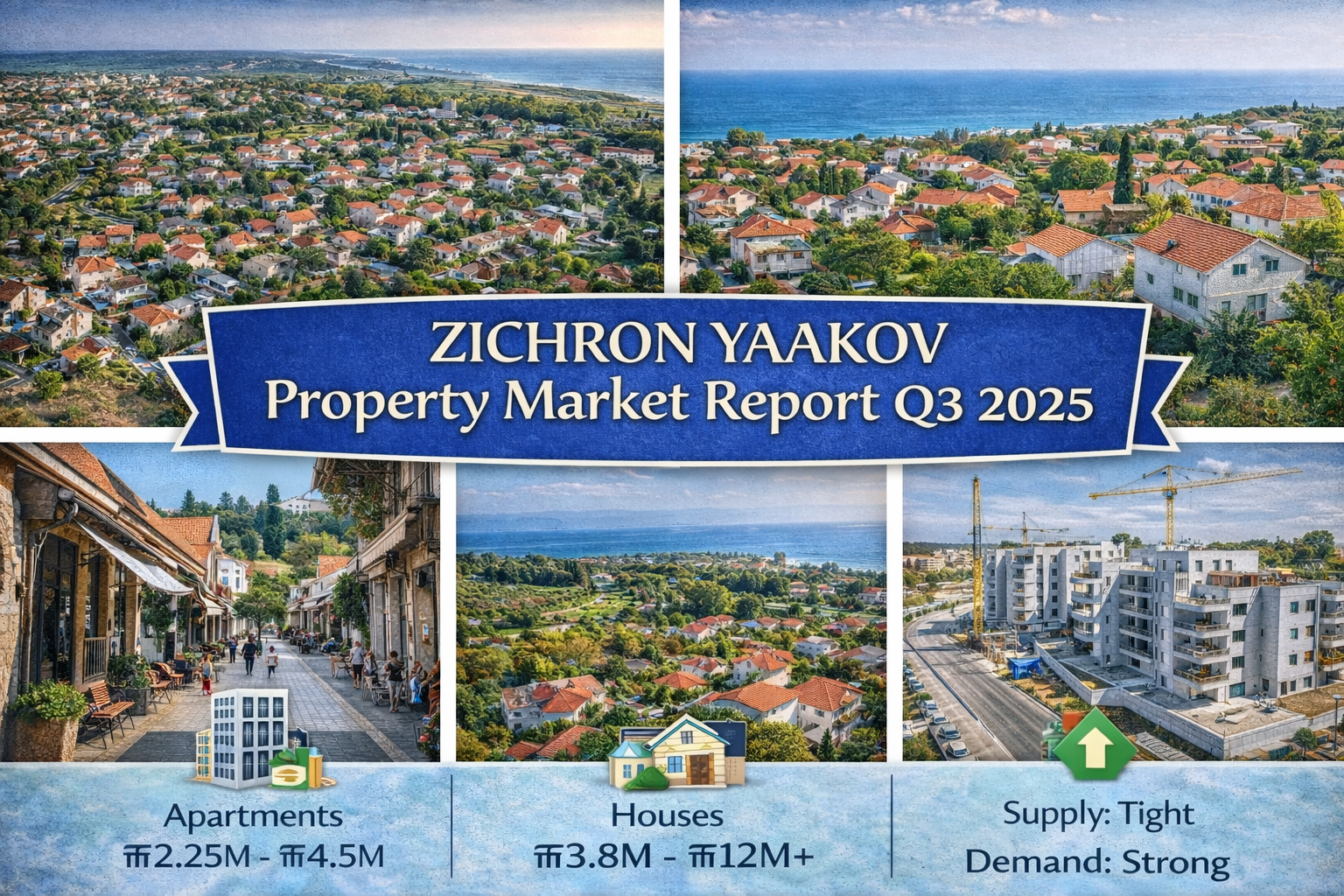
Zichron Yaakov stands as Israel's quintessential wine country town, a municipality of extraordinary heritage and character perched on the southern slopes of Mount Carmel with panoramic Mediterranean views that have established the city as one of the country's most sought-after residential enclaves beyond traditional urban centers. Founded in 1882 by Baron Edmond de Rothschild as one of Israel's pioneering agricultural settlements, Zichron Yaakov has evolved from modest farming village to prestigious lifestyle destination where preserved nineteenth-century architecture, world-class wine tourism infrastructure, and natural beauty create ambiance unmatched elsewhere in Israel and justifying premium property values that position the city among the nation's most exclusive real estate markets despite its relatively small scale and non-metropolitan character.
The property market in Zichron Yaakov during Q1 2025, the most recent period with comprehensive data available, demonstrated remarkable ascent fueled by growing demand from affluent domestic buyers and overseas investors seeking high-quality lifestyle outside traditional urban sprawl. Average property prices climbed to 3.67 million shekels representing substantial 13.5 percent annual increase compared to the same period in 2024, dramatically outperforming most Israeli markets experiencing corrections and positioning Zichron Yaakov as premium lifestyle destination where scarcity, character, and wine country appeal command valuations approaching coastal luxury markets like Herzliya. Transaction activity increased 15.9 percent year-over-year to approximately one hundred ninety-two residential units during the January through March quarter, indicating robust buyer interest when most markets faced volume declines from affordability constraints, with homes selling at average of twenty-seven thousand four hundred shekels per square meter reflecting premium positioning that filters buyer pools to affluent purchasers capable of paying substantial premiums for Zichron Yaakov's unique attributes.
The commanding Mediterranean views from hillside locations represent perhaps Zichron Yaakov's single most distinctive geographic asset, creating visual drama and coastal connection impossible to replicate in inland municipalities while providing cooler climate and fresh breezes compared to valley locations experiencing more extreme summer heat. Properties with westward orientations capturing sunset ocean vistas command substantial premiums over inland locations, creating clear price gradients where sea-view units sell for twenty to thirty percent more than comparable properties just blocks away lacking water vistas, reflecting buyers' willingness to pay for unobstructed Mediterranean panoramas and the associated lifestyle experience. The elevation positioning on Mount Carmel's southern slopes creates natural amphitheater effect with properties cascading down hillside enjoying varied perspective angles and elevation advantages, while the geographic constraint of hillside topography limits developable land creating structural scarcity supporting values through supply limitations preventing the inventory buildups affecting less constrained municipalities.
The preserved historic character in Zichron Yaakov's center creates authentic nineteenth-century ambiance that distinguishes the town from modern Israeli development and attracts buyers seeking character properties with architectural heritage impossible to replicate through new construction. Historic Center properties featuring original stone construction, arched doorways, high ceilings, and period details command premium pricing from five to ten million shekels and above for exceptional units, with limited inventory creating scarcity dynamics where well-preserved heritage homes generate immediate buyer interest from collectors and lifestyle buyers prioritizing authenticity over modern conveniences. The strict conservation measures limiting new construction in central areas ensure that historic character remains protected, creating regulatory framework preventing the wholesale redevelopment that has transformed other Israeli historic neighborhoods into generic modern high-rises, maintaining Zichron Yaakov's distinctive identity and supporting long-term value appreciation for properties embodying the town's heritage character.
Wine tourism infrastructure represents Zichron Yaakov's economic foundation and primary lifestyle attraction, with the famous Rothschild wine cellars, Wine Route wineries, and vineyard estates creating immersive wine country experience attracting both visitors and permanent residents seeking lifestyle centered around viticulture and gastronomy. The Baron's original wine cellars, now operating as museum and tourism destination, anchor the town's wine heritage creating cultural attraction drawing domestic and international visitors who may subsequently consider Zichron Yaakov for part-year residence or permanent relocation. The Wine Route and HaMeyasdim neighborhoods, featuring properties adjacent to active vineyards and boutique wineries, appeal particularly to wine tourism investors and lifestyle buyers seeking vineyard proximity, with prices ranging from six to 9.6 million shekels for properties offering both residential quality and proximity to wine production creating unique ownership experiences. Notable Q1 2025 developments included the Carmel Vineyard Estates and Mediterranean View projects reporting brisk sales, demonstrating that well-positioned boutique developments aligned with Zichron Yaakov's character can successfully attract buyers despite premium pricing when offering authentic connection to wine country lifestyle.
Neighborhood segmentation in Zichron Yaakov reflects the town's geography and development history, with distinct areas serving different buyer demographics and price points while maintaining overall premium character. Historic Center commands highest prices from five to ten million shekels and above for irreplaceable nineteenth-century properties experiencing fastest appreciation as limited inventory encounters growing demand from buyers seeking authentic heritage character. Wine Route and HaMeyasdim areas attract wine tourism investors and second-home buyers with properties priced six to 9.6 million shekels, notable gains during Q1 2025 reflecting continued interest from purchasers seeking vineyard-adjacent lifestyles and investment properties generating income through vacation rentals to wine country visitors. Givat Eden and Ramat Zichron offer slightly more accessible options at three to five million shekels and 3.5 to seven million shekels respectively, attracting younger families drawn to balance of charm, amenities, and proximity to major employment centers in Haifa and Tel Aviv, with these areas providing entry points into Zichron Yaakov market for buyers unable to afford premium historic properties or vineyard estates but seeking the town's lifestyle benefits at more manageable costs.
Property type composition in Zichron Yaakov emphasizes villas, historic homes, and character properties rather than standard apartment buildings dominating typical Israeli urban markets, reflecting the town's positioning as lifestyle destination where buyers seek unique residential experiences beyond pure functional housing. Standard apartments ranging from seventy to one hundred nine square meters typically price from 1.8 to 3.95 million shekels representing entry-level options, though still requiring substantial capital given Zichron Yaakov's premium positioning filtering buyer pools to affluent purchasers. Large apartments and penthouses of one hundred twenty to one hundred fifty-five square meters command 5.95 to 7.85 million shekels serving affluent families seeking spacious accommodations with modern amenities while benefiting from Zichron Yaakov location and character. Private villas of one hundred eighty-three to two hundred fifty square meters dominate high-end market at six to 7.5 million shekels, providing substantial outdoor space, privacy, and character that define Zichron Yaakov's appeal to premium buyers prioritizing lifestyle quality over pure residential functionality.
Historic homes of two hundred thirty-one to three hundred seven square meters represent ultimate Zichron Yaakov product at 7.5 to 10.5 million shekels and above, offering authentic nineteenth-century architecture combined with modern renovations providing contemporary comfort within heritage shells, attracting collectors and lifestyle buyers for whom architectural character justifies premium pricing over generic luxury properties lacking historical significance. Vineyard estates exceeding three hundred square meters command ten million shekels and above, serving wine tourism investors and ultra-affluent buyers seeking properties combining residential quality with agricultural or tourism business potential, creating investment opportunities where property appreciation supplements income from wine production, tasting room operations, or vacation rental activities capitalizing on Zichron Yaakov's wine country appeal. The emphasis on character properties with substantial outdoor space reflects Zichron Yaakov's positioning as lifestyle destination rather than pure residential suburb, creating market dynamics where uniqueness and authenticity command premiums over standardization and efficiency that drive value in conventional urban markets.
The rental market in Zichron Yaakov serves dual purposes encompassing both traditional long-term residential tenants and vacation rental guests attracted by wine tourism, creating complex dynamics where property owners can pursue different strategies balancing occupancy, income, and personal use depending on individual objectives. Long-term residential rentals for standard properties range from five thousand to seven thousand shekels monthly, providing baseline income for investors unable or unwilling to manage vacation rental operations requiring more intensive property management and marketing efforts. Larger homes and villas command ten thousand to fifteen thousand shekels for long-term tenants seeking Zichron Yaakov lifestyle quality, serving affluent families and corporate executives on extended assignments willing to pay premium rents for exceptional residential environments. The vacation rental market generates premium rates during peak tourism seasons when domestic and international visitors seek accommodations near wineries and tourism attractions, creating income opportunities substantially exceeding long-term rental yields but requiring property management capability and tolerance for occupancy variability depending on seasonal demand patterns.
Foreign investment plays important role in Zichron Yaakov market dynamics, accounting for approximately twenty-two percent of residential purchases during Q1 2025 according to market reporting, with North American and French buyers leading international acquisition trends. North American purchasers demonstrate noticeable preference for historic homes and vineyard-adjacent properties, with many acquisitions intended for part-year residency or high-end vacation rental investments combining personal use during visits with income generation during absence periods. French buyers represent significant segment attracted by wine culture affinity and Zichron Yaakov's Mediterranean character resonating with French lifestyle preferences, creating sustained international demand providing market stability during periods when domestic buyers face constraints. The international buyer presence creates less cyclical demand compared to purely domestic markets where economic downturns immediately impact transaction activity, as foreign purchasers often incorporate emotional and lifestyle considerations beyond pure financial optimization, maintaining purchase interest even during challenging economic environments when purely investment-motivated buyers retreat from markets.
Several fundamental trends underpinned Zichron Yaakov's exceptional Q1 2025 performance, creating sustained upward momentum resistant to broader market corrections affecting most Israeli municipalities. The town's strict conservation measures continued limiting new supply, ensuring well-located and historically significant properties retained high premium value through structural scarcity preventing inventory buildups that pressure prices in markets with aggressive development. Expanding wine tourism driven by growing domestic interest in Israeli wines, cultural events including harvest festivals and concerts, and increasing popularity of remote work arrangements enabling professionals to establish residence outside traditional employment centers all contributed to buyer interest in Zichron Yaakov as lifestyle destination offering quality of life benefits justifying premium pricing. Transportation improvements, particularly enhanced highway connectivity making commuting to Haifa, Netanya, and even Tel Aviv increasingly viable for daily or occasional trips, reduced perceived isolation that might otherwise limit market appeal to pure vacation-home buyers without employment flexibility.
Market dynamics during Q1 2025 demonstrated Zichron Yaakov's positioning as premium lifestyle market experiencing appreciation and transaction growth when most Israeli real estate faced corrections, with the 13.5 percent annual price increase and 15.9 percent volume growth representing exceptional performance suggesting fundamental demand-supply imbalances favoring sellers. The twenty-seven thousand four hundred shekel average price per square meter positions Zichron Yaakov at premium levels approaching Herzliya and substantially exceeding typical Central District markets, reflecting the town's unique value proposition where lifestyle quality, character, and scarcity justify pricing typically associated with coastal luxury rather than inland secondary cities. Villas and historic homes continued dominating high-end transactions, driven by buyers seeking character properties with substantial outdoor space rather than standard apartments, indicating market strength concentrated in segments embodying Zichron Yaakov's distinctive attributes rather than generic residential product available in numerous alternative locations.
Investment perspectives on Zichron Yaakov property require analyzing the town's value proposition as scarce lifestyle product serving affluent buyers seeking wine country character combined with Mediterranean beauty, with investment considerations balancing modest rental yields against appreciation potential from structural scarcity and growing wealth concentration among target demographics. For lifestyle buyers prioritizing character and quality of life over pure financial returns, Zichron Yaakov represents Israel's premier wine country destination where purchase decisions reflect desire for authentic heritage properties and vineyard proximity rather than yield optimization, with potential appreciation representing upside rather than primary motivation. Historic Center properties offer irreplaceable character with limited supply ensuring long-term value through scarcity dynamics that prevent the supply responses undermining appreciation in markets where development can expand meeting demand. Sea-view properties command premium pricing with westward orientations capturing Mediterranean vistas creating permanent advantages impossible for inland locations to replicate regardless of improvements or renovations.
Vineyard-adjacent properties in Wine Route and HaMeyasdim neighborhoods capitalize on tourism appeal creating dual-use opportunities where owners can occupy properties personally while generating vacation rental income during high tourism seasons, though this requires professional property management and marketing capability to optimize occupancy and rates. Givat Eden and Ramat Zichron offer more accessible entry points while maintaining quality and views, appealing to buyers seeking Zichron Yaakov benefits without extreme luxury pricing characteristic of historic properties and vineyard estates, creating opportunities for younger professionals and families willing to accept less prestigious addresses in exchange for financial accessibility. Remote work professionals benefit particularly from Zichron Yaakov's lifestyle quality combined with Haifa and Tel Aviv connectivity enabling occasional office attendance while maintaining primary residence in superior living environment compared to urban density and congestion.
For investors pursuing financial returns, the 13.5 percent annual appreciation demonstrated during Q1 2025 outperforms most Israeli markets creating wealth-building opportunities, though this performance cannot be guaranteed to continue indefinitely and requires careful assessment of whether current valuations already incorporate expected future appreciation leaving limited upside. The structural scarcity from conservation measures supports sustained price growth by preventing supply responses that typically moderate appreciation in markets where development can expand meeting demand, creating supply-constrained dynamics more typical of established European wine regions than Israeli growth markets where construction proceeds relatively freely. The dual-revenue strategy combining part-year personal use with vacation rental income creates flexibility allowing owners to enjoy properties personally while generating cash flows offsetting ownership costs, though this requires accepting complexity of managing two distinct use patterns and potential conflicts between optimal personal scheduling and peak rental seasons.
The twenty-two percent foreign investment share demonstrates international confidence in Zichron Yaakov market and provides demand source less correlated with Israeli economic cycles, creating stability during domestic downturns when international buyers maintain purchasing capacity and motivation independent of local conditions. Wine tourism growth creates expanding rental market as visitor volumes increase supporting vacation rental economics, though tourism faces cyclical volatility from geopolitical events and economic downturns affecting discretionary travel spending creating income risk for investors dependent on rental cash flows. Historic properties appreciate faster than standard housing given irreplaceable character and limited inventory creating scarcity premiums that compound over time, though these properties often require higher maintenance costs and specialist contractors familiar with heritage building techniques increasing ownership expenses beyond typical apartment assessments.
For sellers, Zichron Yaakov's exceptional market strength creates favorable positioning with sustained buyer demand supporting pricing power, though emphasis on character, views, and proximity to wineries remains essential when marketing to appropriate buyer pools appreciating the town's unique attributes. Marketing to international buyers, particularly North Americans and French purchasers demonstrating strong presence in market data, requires specialized channels and agents familiar with foreign buyer expectations differing from typical Israeli purchaser priorities around property configurations, finishes, and lifestyle amenities. Highlighting vacation rental potential appeals to investment-minded buyers seeking properties generating income supplementing appreciation, creating additional demand beyond pure residential purchasers and potentially supporting premium pricing for properties with strong tourism appeal. Historic preservation status adds prestige and scarcity value creating marketing advantages, though also involves maintenance obligations and potential restrictions on modifications that some buyers may view as constraints requiring disclosure and appropriate positioning.
Timing listings to coincide with wine tourism seasons when buyer traffic peaks and properties can be showcased during optimal conditions may improve outcomes compared to winter periods when reduced tourism and less attractive weather conditions diminish Zichron Yaakov's appeal to lifestyle-oriented purchasers visiting town to assess residential potential. The premium pricing characteristic of Zichron Yaakov market at twenty-seven thousand four hundred shekels per square meter requires significant capital creating natural buyer pool filtering to affluent purchasers, limiting market liquidity compared to mid-market properties accessible to broader demographics and potentially extending selling timelines when appropriate buyers must be identified from smaller eligible population. The limited transaction volume of one hundred ninety-two units during Q1 2025 reflects both Zichron Yaakov's small scale and premium positioning, creating market where patience may be required to identify optimal buyers rather than expecting immediate liquidity typical of large-volume urban markets with continuous buyer flows.
Market considerations requiring buyer attention include premium pricing at twenty-seven thousand four hundred shekels per square meter average demanding significant capital accessible primarily to affluent purchasers, filtering buyer pools and creating natural barriers to entry that maintain exclusivity but reduce market liquidity compared to broadly accessible markets. The limited liquidity from small transaction volumes of one hundred ninety-two quarterly units means selling timelines may extend beyond major cities where continuous buyer activity creates faster turnover, requiring financial flexibility and planning horizons accommodating potential extended marketing periods. Commute distance of approximately seventy-five minutes to Tel Aviv may not suit daily commuters requiring frequent urban access, making Zichron Yaakov optimal for remote workers, retirees, or professionals with flexible schedules rather than traditional office employees commuting five days weekly.
Historic property maintenance requires higher upkeep costs and preservation compliance compared to modern construction, with older homes demanding specialist contractors, authentic materials, and regulatory approvals for modifications creating ownership expenses beyond typical apartment building fees that must be budgeted appropriately. Tourism dependence creates vulnerability for vacation rental income strategies, with geopolitical events, economic downturns, or changing travel patterns affecting visitor volumes and potentially reducing rental revenues below projections based on historical peak performance during favorable tourism conditions. The limited new supply from conservation restrictions, while supporting prices through scarcity, also constrains purchase options for buyers seeking specific property configurations or locations, potentially requiring compromises or extended search periods to identify appropriate opportunities within limited available inventory.
Environmental and quality of life considerations in Zichron Yaakov reflect the town's hillside Mediterranean location creating both benefits and vulnerabilities related to climate, topography, and development constraints. The elevated Mount Carmel positioning provides cooler temperatures and fresh breezes compared to valley locations, creating climate advantages particularly valuable during summer months when coastal plains and valleys experience intense heat, though hillside topography creates accessibility challenges for elderly residents or those with mobility limitations preferring flat terrain. The preserved character and limited development maintain low density and green space creating quality of life benefits distinguishing Zichron Yaakov from denser urban environments, though this same development constraint limits commercial depth and requires travel to larger cities for specialized shopping, entertainment, or services beyond basic daily needs available in small-town retail ecosystem.
Water availability and conservation represent ongoing considerations in Mediterranean climate with seasonal rainfall patterns, requiring responsible usage and potentially affecting landscaping choices and outdoor amenity maintenance particularly during drought periods when water restrictions may limit irrigation for gardens and landscaping that contribute to property appeal. The wine country character and agricultural surroundings create scenic beauty and lifestyle ambiance, though also involve accepting proximity to active farming operations including potential pesticide use, seasonal labor activity, and agricultural machinery creating noise or visual impacts that urban buyers unaccustomed to rural environments may find surprising or concerning despite being normal aspects of wine country living.
Future development prospects in Zichron Yaakov remain constrained by conservation policies and limited available land, creating supply dynamics favoring existing property values through scarcity but limiting options for buyers seeking specific configurations or locations within restrictive inventory. The Q1 2025 boutique projects including Carmel Vineyard Estates and Mediterranean View demonstrate that selective development proceeds within regulatory framework, though at limited scale preventing the substantial inventory additions that might pressure prices through oversupply. The town's established character and mature infrastructure suggest major transformational development appears unlikely absent dramatic policy shifts, creating stability for existing property values while potentially limiting dramatic appreciation absent external shocks or demand surges overwhelming available supply.
Demographic projections suggest Zichron Yaakov will continue attracting affluent buyers seeking lifestyle quality and wine country character, though the town's small scale and premium positioning limit addressable market to relatively narrow buyer demographics capable of affording entry and appreciating the specific attributes distinguishing Zichron Yaakov from alternative residential options. The aging of current residents may create lifecycle transitions as retirees downsize or health considerations necessitate relocating to areas with better medical access and senior services, potentially increasing inventory of certain property types while creating demand for age-appropriate configurations though these transitions typically occur gradually rather than creating sudden market disruptions. Immigration of wealthy diaspora members seeking Israeli lifestyle properties should continue providing international buyer flows, particularly from North American and French Jewish communities demonstrating historical interest in Zichron Yaakov's unique character and wine country appeal.
Comparison to alternative lifestyle markets helps contextualize Zichron Yaakov's value proposition within competitive landscape of Israeli premium residential destinations. Herzliya and coastal luxury markets command comparable or higher pricing through Mediterranean proximity and Tel Aviv accessibility, though lacking Zichron Yaakov's wine country character and historic preservation creating different lifestyle proposition appealing to distinct buyer preferences around urban versus rural, beach versus vineyard, and cosmopolitan versus heritage-oriented residential environments. Jerusalem neighborhoods offer spiritual and historical significance impossible to replicate elsewhere, though at substantially higher costs and with different character more urban and religiously-oriented compared to Zichron Yaakov's secular wine country lifestyle. Galilee locations including Rosh Pina and Safed provide alternative heritage and character destinations at varied price points, though with different regional dynamics and tourism patterns creating distinct market characteristics rather than direct competition.
Looking forward, Zichron Yaakov's property market trajectory appears positioned for continued relative strength based on structural scarcity, growing wealth among target demographics, expanding wine tourism infrastructure, and lifestyle trends favoring authentic character over generic luxury, though absolute performance will depend on broader economic conditions, international buyer sentiment, and successful tourism industry maintenance supporting vacation rental economics. The exceptional Q1 2025 results showing 13.5 percent price appreciation and 15.9 percent transaction growth demonstrate market momentum suggesting near-term continuation of favorable dynamics absent dramatic negative shocks, though extrapolating these growth rates indefinitely would create valuations potentially disconnecting from fundamental value creation and buyer capacity to pay. The structural supply constraints from conservation measures provide foundation for sustained appreciation over long time horizons as growing wealth encounters fixed luxury housing inventory, creating scarcity dynamics that historically drive premium real estate returns independent of broader economic cycles.
Zichron Yaakov emerges from this analysis as Israel's premier wine country town offering unique lifestyle proposition combining Baron Rothschild heritage, world-class wine tourism infrastructure, preserved nineteenth-century character, and commanding Mediterranean views creating residential experience unmatched elsewhere in the country and justifying premium property values approaching coastal luxury markets. The town serves affluent buyers prioritizing lifestyle quality, architectural character, wine country immersion, and authentic heritage over urban convenience or standard luxury positioning, delivering tangible benefits through irreplaceable historic properties, vineyard proximity, and cultural richness that few alternative markets can match across all dimensions simultaneously. For lifestyle purchasers seeking Israel's ultimate wine country residence, international buyers establishing premium Israeli properties, and investors pursuing scarcity-driven appreciation in distinctive market, Zichron Yaakov provides compelling combination of attributes that justify premium pricing to those capable of affording entry and valuing what the town specifically offers. The market ultimately rewards buyers who appreciate Zichron Yaakov's unique character—wine country lifestyle, historic preservation, Mediterranean beauty—and align purchase decisions with these specific attributes rather than expecting urban amenities, coastal beach access, or characteristics more appropriately associated with different market segments operating at alternative positioning and serving distinct buyer demographics.