
A Vision Rising in the Heart of Bavli
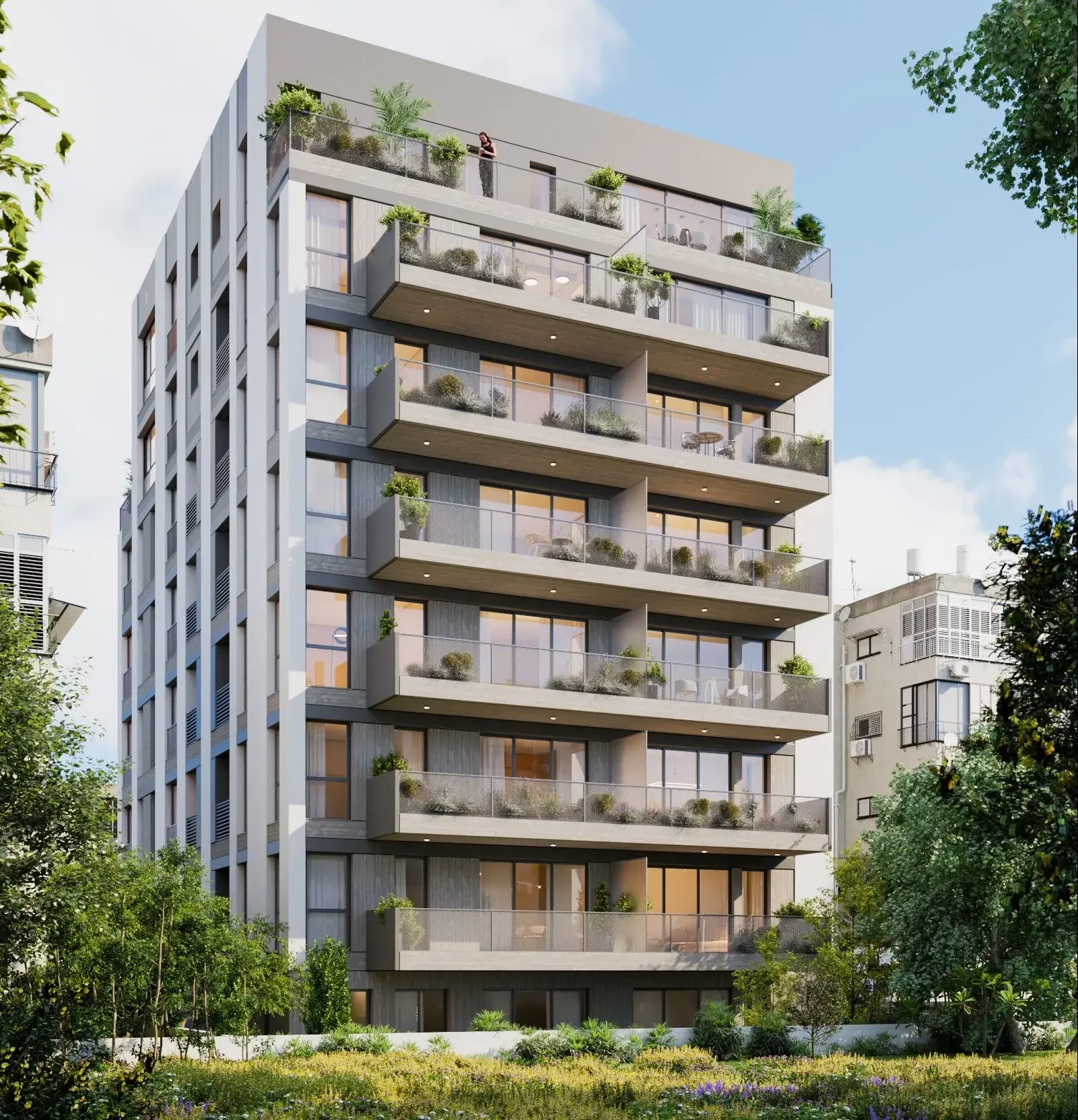
TEL AVIV 002
In the northern reaches of Tel Aviv, where the urban pulse softens against the gentle curve of the Yarkon River, there exists a street that longtime residents speak of with a particular fondness. HaKnesset HaGdola Street winds through the Bavli neighborhood—a place that has somehow managed to preserve the essence of what community living means in an era of relentless development. Here, neighbors still greet one another by name. Children walk to nearby schools and kindergartens along tree-lined sidewalks. The park is not a destination but a daily companion, woven into the rhythm of morning jogs and evening strolls.
It is on this street, at number 11, that a transformation is quietly taking shape.
The existing structure—a product of another era's architectural ambitions—will soon give way to something new. In its place will rise an eight-story building containing twenty-eight apartments, each designed to capture the unique character of this coveted location. The project represents what has become known in Tel Aviv's urban planning circles as "demolition and reconstruction," a process that exchanges aging infrastructure for modern living while maintaining the human scale that makes neighborhoods like Bavli so desirable.
The architectural vision comes from Moshelin Simon Architects, a firm tasked with the delicate balance of creating something contemporary while respecting the established character of the street. The designs suggest a building that will engage with its surroundings rather than overwhelm them—a thoughtful addition to a streetscape that has evolved organically over decades.
What makes this particular address so sought-after begins with geography but extends far beyond it. The proximity to Yarkon Park cannot be overstated. This is not simply a matter of having green space nearby; it is about access to one of Tel Aviv's most precious urban amenities. From HaKnesset HaGdola 11, residents can step out their doors and within moments find themselves on walking paths that meander along the river, past botanical gardens, through sports facilities, and ultimately all the way to the Mediterranean shore. The Reading compound, with its evolving landscape of cultural venues and recreational spaces, lies at the end of a pleasant walk that takes one through some of the city's most pleasant terrain.
For families, the appeal multiplies. Schools and kindergartens dot the surrounding blocks, eliminating the morning scramble that plagues so many urban households. The Bavli neighborhood has long been known as a place where families put down roots—where the decision to raise children in the city doesn't require sacrificing the quality of life one might find in quieter suburbs.
The apartments themselves reflect the diversity of modern Tel Aviv living. At the ground level, garden apartments offer that rarest of urban luxuries: private outdoor space that feels genuinely expansive. A three-room unit here might include a 70-square-meter interior paired with a 23-square-meter garden, while a larger four-room option offers 101 square meters inside and an extraordinary 121-square-meter garden—the kind of space where children can play, where one might cultivate a genuine garden, where the boundary between indoors and outdoors begins to blur.
Rising through the building, the apartments take on different characters. The first floor offers comfortable three-room units of 76 and 77 square meters, each with 14-square-meter balconies that provide that essential Tel Aviv amenity: outdoor space for morning coffee, evening conversations, and the simple pleasure of Mediterranean air. A generous five-room apartment on this floor stretches to 117 square meters, accommodating families who need room to spread out.
The middle floors continue this pattern of thoughtful variety, while the upper reaches of the building promise something more dramatic. On the sixth floor, a five-room apartment of 166 square meters commands a 62-square-meter balcony—a space substantial enough to function as an outdoor living room with views that sweep across the Yarkon and toward the sea.
The seventh floor represents the pinnacle of the project's residential offerings. Here, the architecture opens up into configurations that defy typical apartment conventions. A three-room unit of 134 square meters includes not only a 33.6-square-meter balcony but also access to 63 square meters of roof space—a private outdoor domain in one of the city's most desirable locations. A five-room duplex spanning 157 square meters with 75 square meters of outdoor space offers the experience of a private home within a communal building. Another four-room unit matches these dimensions, providing yet another configuration for those seeking space and light.
The current status of the project—awaiting permit—represents that particular moment of anticipation that characterizes so much of Tel Aviv's ongoing transformation. The plans have been drawn, the vision articulated, the future residents already imagining themselves in spaces that exist only as renderings and floor plans. The permit process in this city, particularly for demolition and reconstruction projects, involves multiple stakeholders and careful consideration of how new construction will affect existing neighborhoods. It is a process that can feel interminable to those waiting for it to conclude, but one that ultimately serves the goal of thoughtful urban development.
For those familiar with the Bavli neighborhood, this project represents a continuation of a pattern that has reshaped the area over the past two decades. What was once a relatively modest neighborhood of low-rise buildings has gradually transformed into a destination for those seeking the benefits of urban Tel Aviv life combined with the green spaces and community feel that many assumed had been lost to development. The Yarkon Park edge has become particularly valuable, offering residents a daily connection to nature that seems almost miraculous in a city as dense and dynamic as Tel Aviv.
The street itself—HaKnesset HaGdola—carries a name that translates roughly to "The Great Assembly," evoking Israel's ancient parliamentary traditions. It is a name that suggests gathering, community, shared purpose. Whether by design or happy accident, the street has lived up to its name, becoming a place where residents form connections that extend beyond the transactional relationships that can characterize urban life elsewhere.
The interior renderings that have been released suggest apartments filled with natural light, with the kind of clean lines and open layouts that contemporary buyers expect. Large windows frame views that will change character throughout the day—the soft morning light over the park, the golden hour glow that gives Tel Aviv its particular beauty, the city lights that emerge as evening settles over the coastal plain.
What cannot be captured in any rendering is the texture of daily life that this location promises. The sound of children in the nearby schoolyard. The particular quality of air that comes from proximity to both river and sea. The convenience of urban infrastructure combined with the sense of escape that the park provides. The knowledge that the beach lies not at the end of a frustrating drive but at the conclusion of a pleasant walk through one of the city's most beautiful green corridors.
For those who have lived in Tel Aviv long enough to remember what Bavli once was—and who have watched its transformation into one of the city's most desirable neighborhoods—this project represents both an endpoint and a continuation. The older building at HaKnesset HaGdola 11 served its residents well for its time. The new structure will serve a new generation, with the amenities and design standards that contemporary life demands. Yet the essential appeal remains unchanged: this is a place where the city and the park meet, where community and privacy coexist, where the dream of urban living finds one of its most appealing expressions.
Twenty-eight apartments. Eight floors. One address that captures something essential about what it means to live well in Tel Aviv. The project awaits its permits, and future residents await their opportunity to become part of a story that has been unfolding on this street for generations—and will continue to unfold for generations to come.
Need our help?
Navigating the Israeli property market as an English speaker doesn't have to be overwhelming. Whether you're searching for your first home in Ashkelon, exploring investment opportunities along the marina, or simply trying to understand what's realistic for your budget — we're here to guide you every step of the way.
Fill in the form below, and start your journey the easy way.
Our team speaks your language, understands your concerns, and knows this market inside out. From initial consultation to handing you the keys, we'll make your Israeli property dream a reality.