
The Law of Return Explained
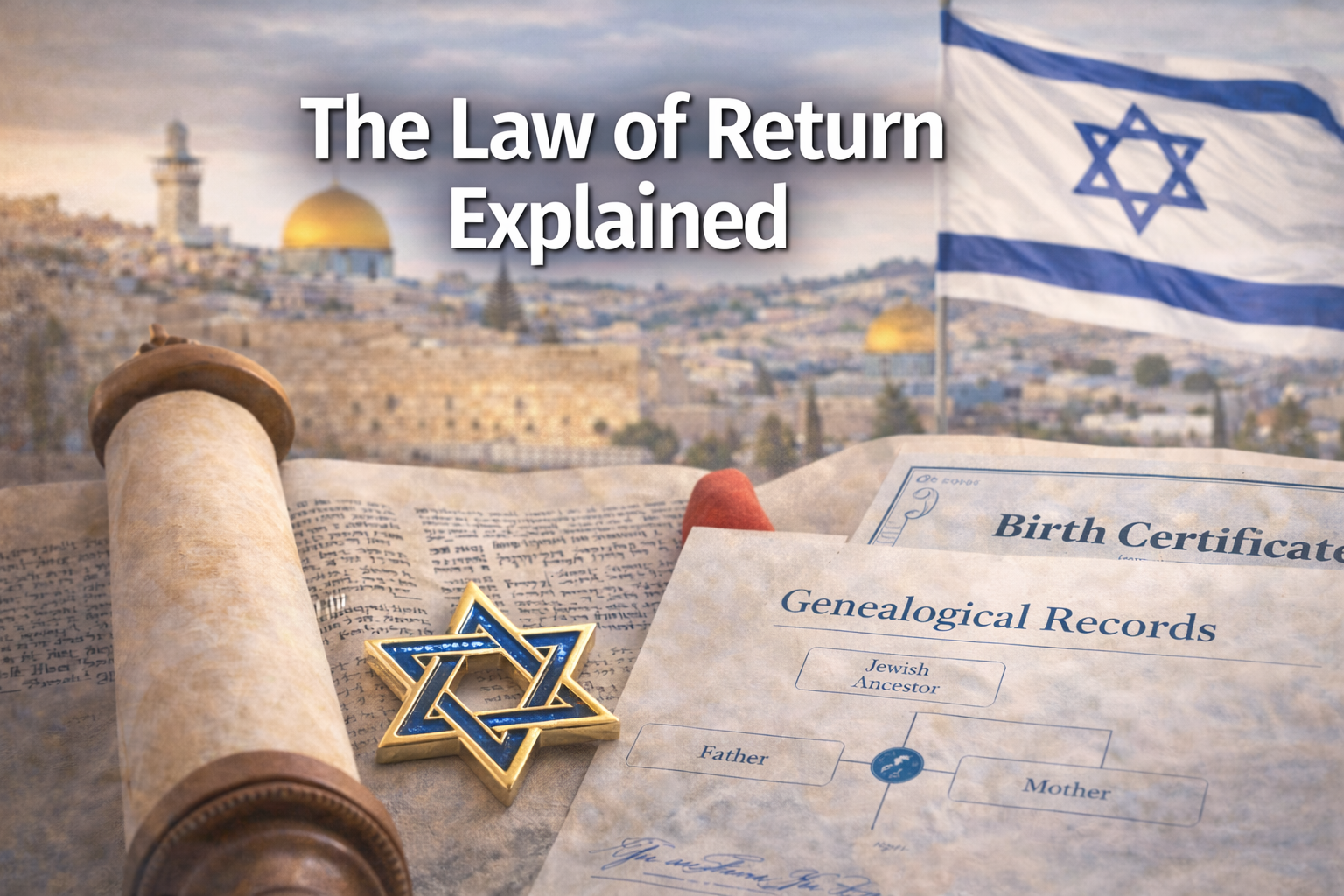
Israel's Foundational Immigration Law
The Law of Return stands as one of Israel's most significant and defining pieces of legislation. Enacted in 1950, just two years after the nation's establishment, this law fundamentally shapes the character of the State of Israel and its relationship with Jews around the world.
What Is the Law of Return?
The Law of Return grants every Jew the right to immigrate to Israel and obtain citizenship. It declares:
"Every Jew has the right to come to this country as an oleh."
The term oleh (plural: olim) is Hebrew for a Jewish immigrant to Israel.
This is more than an immigration policy—it is a founding principle of modern Israel, reflecting the nation's identity as a homeland for the Jewish people.
Historical Context
The law emerged directly from the Holocaust and centuries of Jewish persecution. During World War II, countless Jews seeking refuge were turned away by countries worldwide, leading to their deaths in Nazi concentration camps. The tragic 1939 voyage of the MS St. Louis—where 937 Jewish refugees were refused entry by Cuba, the United States, and Canada—became a symbol of this abandonment.
When Israel declared independence in 1948, one of its first priorities was ensuring that Jews would always have a guaranteed place of refuge. The Law of Return was the legislative embodiment of that promise.
Key Provisions
The Original 1950 Law
The initial version granted immigration rights to Jews and their spouses.
The 1970 Amendment
Following legal debates, the law was expanded to include:
Children and grandchildren of Jews
Spouses of Jews
Spouses of children of Jews
Spouses of grandchildren of Jews
This amendment means that anyone with at least one Jewish grandparent may make Aliyah, along with their spouse—even if that spouse is not Jewish.
Automatic Citizenship
Unlike most immigration laws worldwide, the Law of Return doesn't just grant permission to immigrate—it automatically confers citizenship upon arrival. New immigrants receive a Teudat Oleh (immigrant certificate) and can immediately apply for an Israeli passport and identity card.
Who Qualifies?
Definition of "Jew"
The law defines a Jew as someone born to a Jewish mother or who has converted to Judaism and does not practice another religion.
Extended Family
The law extends to children and grandchildren of Jews (including through the paternal line), as well as all their spouses.
Exclusions
Those who have voluntarily converted to another religion are excluded, though their descendants may still qualify under the family connection provisions.
Benefits for New Immigrants
Those who immigrate under the Law of Return receive substantial support through the Sal Klita (Absorption Basket) program:
Financial assistance for initial living expenses
Free Hebrew language classes (Ulpan)
Tax benefits and reduced customs fees
Assistance with housing, employment, and education
Subsidized health insurance during the initial period
What Makes This Law Unique
The Law of Return makes Israel distinctive in several important ways:
Automatic Citizenship: Few countries in the world grant automatic citizenship upon arrival to any category of immigrants.
Diaspora Connection: The law institutionalizes a legal bond between Israel and Jews worldwide, regardless of whether they have ever lived in or visited the country.
No Quota System: Unlike virtually all other immigration laws, there are no numerical limits—every eligible person has the right to immigrate.
How to Apply
Prospective immigrants apply through Israeli consulates or Jewish Agency offices worldwide. Eligibility must be proven through documentation such as:
Birth and marriage certificates
Conversion documents (if applicable)
Letters from rabbis or Jewish community organizations
Genealogical records
Security background checks are conducted, and those deemed security risks may be denied entry.
A Promise to the Jewish People
The Law of Return represents more than immigration policy—it embodies the fundamental purpose for which Israel was established: to serve as a homeland and refuge for the Jewish people.
For millions of Jews worldwide, this law represents a promise—that they will always have a home in Israel, should they need or want one.