
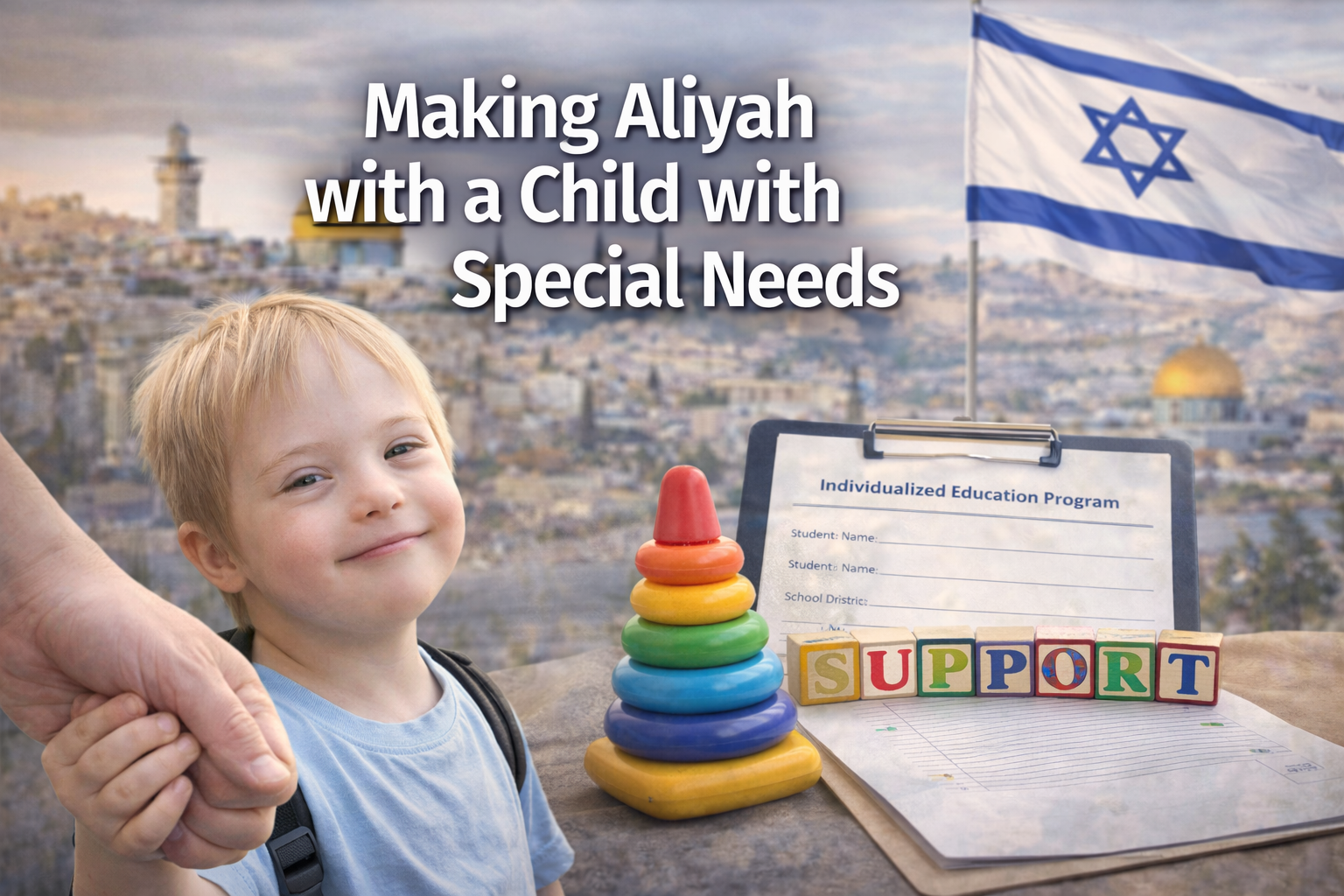
Making Aliyah with a Child with Special Needs
A Comprehensive Guide for Families
Making Aliyah is a major life transition for any family. When you have a child with significant special needs or medical conditions, the decision becomes even more complex, requiring careful research, planning, and realistic expectations. Israel offers excellent medical care and special education services in many areas, but thoughtful preparation is essential.
Is Aliyah Right for Your Family?
Before diving into logistics, families must honestly assess whether Aliyah serves their child's best interests. Consider these factors:
Your Child's Specific Needs:
Are the required specialists and services available in Israel?
Is your child's condition well-understood and treated there?
How critical is continuity of care?
Can your child handle a major transition?
Your Support System:
Do you have family in Israel who can help?
Can you navigate Israeli bureaucracy in Hebrew?
Do you have financial resources for the transition?
Understanding Israel's Healthcare System
Israel has universal healthcare with generally high-quality medical services. All residents must join one of four Kupot Cholim: Clalit, Maccabi, Meuhedet, or Leumit.
What's Covered:
Basic medical care and hospitalization
Most specialists and many medications
Some therapies and emergency services
Often Requires Supplemental Coverage:
Extensive therapy (OT, PT, speech beyond basic sessions)
Specialized equipment and private specialists
Certain medications not on national formulary
Extended mental health services
Important: Israel accepts immigrants with pre-existing conditions. Healthcare coverage begins immediately upon citizenship with no waiting periods.
Medical Preparations Before Aliyah
Get Complete Medical Records:
Comprehensive medical history and recent evaluations
Medication lists with generic names
Treatment plans and diagnostic reports
Letters from specialists explaining condition and needs
Have Critical Documents Translated:
Professional Hebrew translations of key medical documents
Detailed summaries from specialists
Bring both English and Hebrew versions
Research Israeli Resources:
Identify relevant specialists and contact them before Aliyah
Research which hospitals specialize in your child's condition
Join Facebook groups for parents of special needs children in Israel
Special Education in Israel
The Israeli System Offers:
Inclusive Education (Lul Meshalev): Children with mild to moderate needs integrated into regular classrooms with support services
Special Education Classes: Small classes within regular schools for children with more significant needs
Special Education Schools: Separate schools for children with severe needs, with specialized staff and transportation often provided
The Vaada (Committee) Process:
Upon arrival, your child will need assessment by a multi-disciplinary evaluation committee that determines services and placement. This can take several months. Bring all diagnostic reports, IEPs, and evaluations from your current country.
Therapy and Intervention Services
Through Kupat Cholim: speech, occupational, and physical therapy (limited sessions)
Through education system: school-based therapies and special education support
Through Bituach Leumi: disability benefits, mobility assistance, respite care
Private services: more extensive but significant out-of-pocket costs (100–200+ NIS per session)
Financial Considerations
Costs to Anticipate:
Supplemental health insurance: $50–150 per month per person
Private therapies: $1,000–3,000 per month depending on needs
Private schools or programs: $10,000–30,000 per year if needed
Specialized equipment not covered by insurance
Support Available:
Sal Klita (absorption basket) for all immigrants
Child disability allowance (Dmei Nechut) from Bituach Leumi
Tax breaks on imported medical equipment
Non-profit organizations providing assistance
The Transition Process
Pre-Aliyah Preparation:
Take a pilot trip to tour schools and medical facilities
Prepare child for move using visual supports and social stories
Research and contact schools before arriving
Get on specialist waiting lists before arrival if possible
First Year Challenges:
Time to establish medical care and learn new system
Waiting for Vaada assessment and service placement
Language barriers affecting advocacy and services
Potential behavioral challenges from routine disruption
Strategies for Success:
Consider hiring an Israeli advocate (yoetz) who knows the system
Connect with other special needs families and Facebook groups
Find English-speaking professionals when possible
Accept that the first year is survival mode—be patient
Critical Resources and Organizations
Medical Facilities:
Hadassah Medical Center (Jerusalem)
Schneider Children's Medical Center (Petach Tikva)
ALYN Hospital (pediatric rehabilitation)
Beit Issie Shapiro (developmental disabilities)
Support Organizations:
Aleh – children with severe disabilities
ILAN – children with physical disabilities
Yad Sarah – equipment lending
Shalva – children with disabilities
Nefesh B’Nefesh – special needs coordinators
Success Factors
Families who thrive typically have:
Strong partnership: both parents committed and unified
Realistic expectations: understanding services differ, accepting bureaucracy
Resources: financial cushion, family support, ability to hire help
Hebrew skills: at least one parent functional in Hebrew
Persistence: don’t give up when bureaucracy is frustrating
Community: connect with other families, accept help
Final Thoughts
Making Aliyah with a special needs child requires courage, careful planning, realistic expectations, and tremendous resilience. It’s not for every family, and that’s okay. The decision should be based on what’s truly best for your child and family, not ideology alone.
For families who do make the move, challenges are real but so are rewards. Many families successfully navigate the transition and find fulfilling lives in Israel. Success requires thorough research, honest assessment of your capacity, financial resources, patience, flexibility, and a strong support system. Plan for 2–3 years for full adjustment.
There is no shame in deciding Aliyah isn’t right for your family. There is also no shame in trying and changing course if it doesn’t work. Your child’s wellbeing comes first, and only you can determine what that means for your family.