
Beer Sheva | Anglo Communities
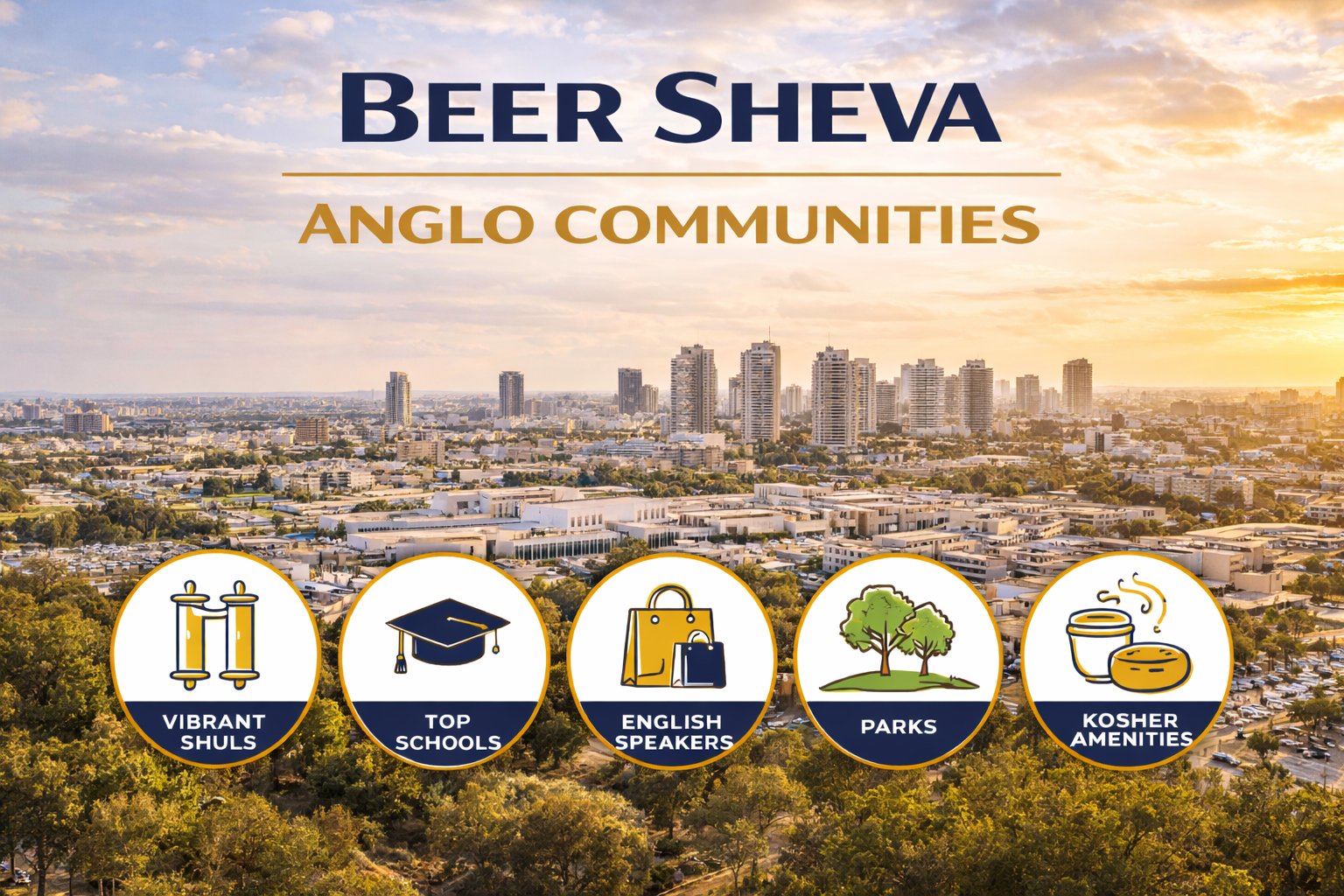
Beer Sheva has developed a notable Anglo community over the past couple of decades, largely driven by affordability, the presence of Ben-Gurion University, and intentional efforts by organizations to attract English-speaking immigrants to the Negev.
The city sits about an hour and a half south of Tel Aviv and serves as the capital of the Negev region. For a long time it had a reputation among Israelis as a peripheral development town, somewhat neglected compared to the center of the country. That perception has been changing as the city has grown, infrastructure has improved, and significant investment has flowed into the region. The high-tech park on the outskirts, the expansion of the university, and the planned relocation of IDF bases to the area have all contributed to a sense that Beer Sheva is developing into something more significant.
The Anglo community in Beer Sheva is more organized than what you'd find in Givatayim, though smaller than Ra'anana or Modi'in. Much of this is due to the work of Nefesh B'Nefesh and the Jewish Agency, which have actively promoted aliyah to the Negev through programs offering financial incentives and support. The Go Negev initiative specifically targeted English speakers, offering absorption benefits, employment assistance, and community programming to encourage Anglos to settle in Beer Sheva and surrounding areas. This has created a more cohesive Anglo presence than would have developed organically.
The community includes a mix of young singles, families, and retirees. Young people often come initially for Ben-Gurion University, which has programs taught in English and attracts international students. Some stay after completing their studies. Families are drawn by the dramatically lower cost of living compared to the center, the ability to buy rather than rent, and the appeal of raising children in a less hectic environment. Retirees find that their money goes much further in Beer Sheva, and some are attracted by the desert climate and the sense of pioneering or contributing to developing the Negev.
Housing costs are the most striking difference from central Israel. Apartments that would cost three or four million shekels in Tel Aviv or Ra'anana might go for under two million in Beer Sheva. Rentals are similarly cheaper, with three-bedroom apartments available for 4,000 to 6,000 shekels in decent areas, sometimes less. This makes home ownership realistic for Anglo families who could never afford to buy in the center. The tradeoff is distance from the center and from family or friends who live in the Gush Dan area. The train to Tel Aviv takes about an hour and a half, and while the highway has improved, the drive can still feel long, especially for those who need to be in Tel Aviv regularly.
The Anglo community has organized itself around several focal points. There are active Facebook groups specifically for Anglos in Beer Sheva and the Negev, where people share information, ask for recommendations, and organize events. These groups tend to be warm and responsive, with a sense of mutual support that comes from being a smaller, more tight-knit community. WhatsApp groups exist for more immediate communication, often organized by neighborhood or interest.
Synagogue life includes options for English speakers. The Masorti community in Beer Sheva has attracted Anglos looking for a traditional but egalitarian approach. There are also Orthodox options, including some with English-speaking members and rabbis who can communicate in English. Chabad has a presence and often serves as a landing spot for Anglos who want traditional services with some English accessibility. The religious landscape is diverse enough that most people can find something that fits, though the options are fewer than in Jerusalem or major Anglo centers.
Ben-Gurion University plays a significant role in the Anglo community. The university has international programs, research centers, and faculty from around the world. This creates a built-in English-speaking population, including academics, researchers, and students. Some Anglos who came for university positions have become long-term residents and community leaders. The university also offers Hebrew ulpan programs and serves as a cultural hub for the city.
For families with children, the school situation requires some navigation. There are no international or bilingual schools in Beer Sheva, so children will attend Israeli schools and be educated in Hebrew. Some Anglo parents supplement with private English tutoring or after-school enrichment to maintain English literacy. The AMIT network has schools in the area that some Anglo families choose. Gan options include municipal ganim and private options, with varying approaches to early childhood education. Anglo parents often share recommendations within the community about which ganim and schools work well for immigrant children.
Healthcare is accessible through the major Kupot Holim, all of which have clinics in Beer Sheva. Soroka Medical Center is a major hospital serving the entire Negev region, with strong departments and specialists. Finding English-speaking doctors is possible, especially through recommendations in the Anglo community. The medical infrastructure is solid, though some specialized care might require travel to Tel Aviv.
Employment is a consideration for Anglos in Beer Sheva. The job market is smaller than in the center, though it's growing. The high-tech park has attracted companies including major players like Deutsche Telekom and Wix, creating opportunities for people in tech. Ben-Gurion University provides academic and research positions. The cyber industry has a growing presence, partly driven by government initiatives to make Beer Sheva a national cyber hub. Some Anglos work remotely for companies based in Tel Aviv or abroad, which has become more common and accepted since the pandemic. Others commute to Tel Aviv one or more days a week, which is manageable though not ideal long-term. The combination of lower living costs and growing local opportunities makes the economics work for many families.
The social scene among Anglos includes organized events, informal gatherings, and community celebrations. Anglo families often become close because they're navigating similar challenges and there's a smaller pool of English speakers to connect with. Holidays like Thanksgiving see Anglo gatherings, and there are efforts to create programming for English-speaking children and teens. The community is small enough that you'll likely know most other Anglos in the city, which some find comforting and others find limiting.
The physical environment is distinctly different from central Israel. Beer Sheva is in the desert, which means hot summers, mild winters, and a landscape of sand and stone rather than Mediterranean greenery. Some people love the desert aesthetic and the sense of open space. Others miss the green and find the summers oppressive. The city itself has parks and greenery through irrigation, but the surrounding area is arid. Day trips to the Negev highlands, the Dead Sea, and Eilat are accessible, and many Anglos in Beer Sheva develop an appreciation for desert hiking and nature.
The cultural offerings have expanded but remain more limited than Tel Aviv. There are theaters, a performing arts center, museums, and events, but the scene is smaller. Tel Aviv's nightlife, restaurants, and cultural institutions are an hour and a half away, which makes spontaneous evenings out less practical. Anglos in Beer Sheva tend to create their own social life within the community and make planned trips to the center for cultural activities.
One challenge that Anglos mention is the distance from other Anglos who live in the center. Family events, friends' gatherings, and community activities in places like Ra'anana or Jerusalem require significant travel. Some feel isolated from the broader Anglo community in Israel. Others appreciate the independence and find that they form deeper local connections as a result.
The municipality has become more attentive to quality of life issues, investing in parks, public spaces, and infrastructure. New neighborhoods are being developed, and old areas are being renovated. There's a sense of a city on the rise, which appeals to some Anglos who want to be part of building something rather than arriving somewhere already established.
For people considering Beer Sheva, the recommendation is usually to visit for an extended period before committing. The city suits people who prioritize affordability, homeownership, community, and a slower pace of life over proximity to the center and cultural amenities. It doesn't suit everyone, and some Anglos have moved back to the center after finding the distance and environment too challenging. But for those it fits, Beer Sheva offers a quality of life that's difficult to achieve elsewhere in Israel on a normal salary.
The Anglo community is welcoming to newcomers and there's a sense that every additional Anglo family strengthens the community. People are generally eager to help with the absorption process, share recommendations, and include new families in social activities. The Facebook groups are a good starting point for connecting before a move, and Nefesh B'Nefesh can provide information about specific programs and benefits available for those making aliyah to the Negev.