
Who Can Join the IDF?
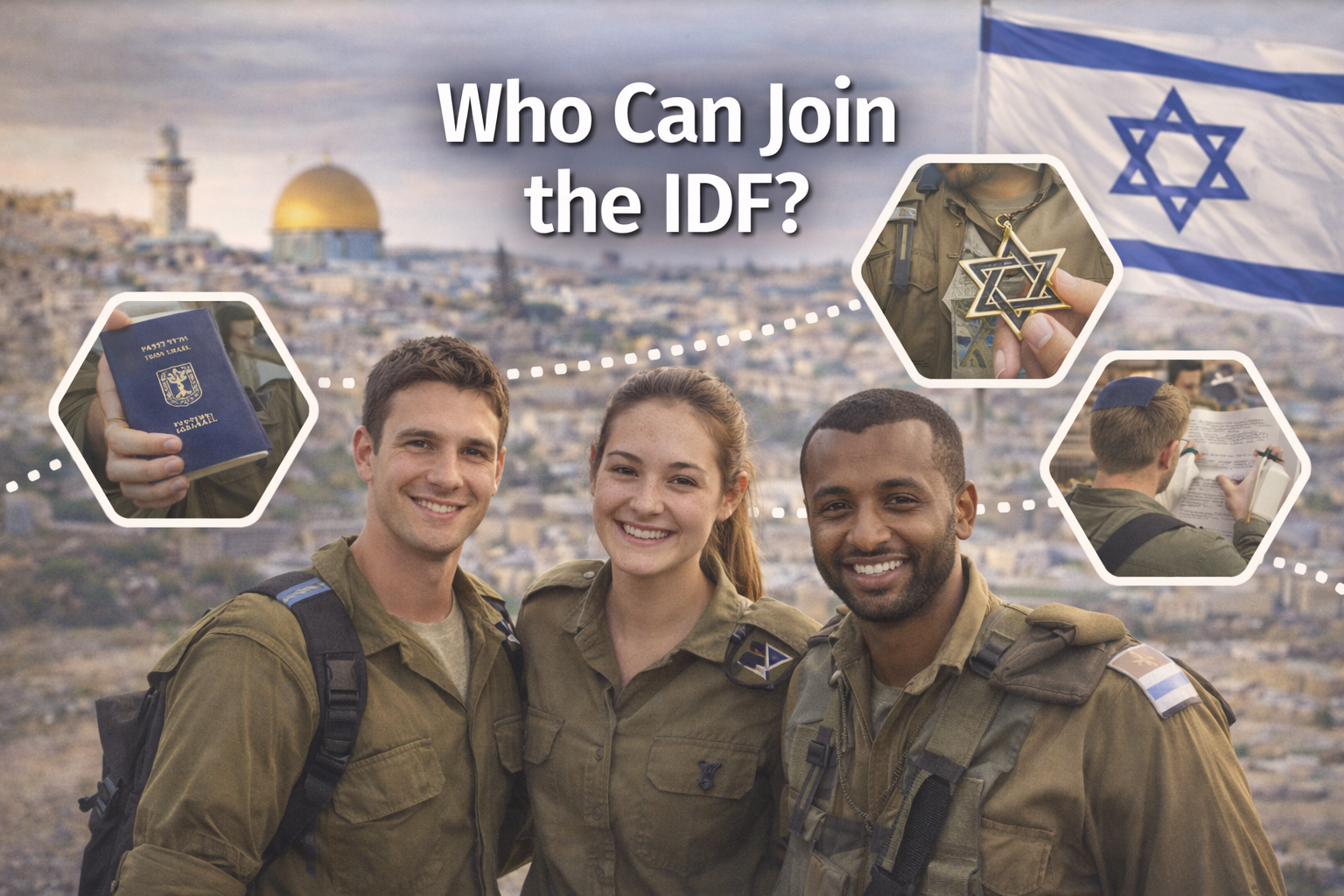
Service Requirements, Exemptions, and Options
Military service in the Israel Defense Forces (IDF) is a defining experience for many Israelis and a significant consideration for those making Aliyah. Understanding who must serve, who can volunteer, and what exemptions exist is crucial for anyone considering immigration to Israel.
Mandatory Service: Who Must Serve
Israeli-Born Citizens
Jewish and Druze Men:
32 months of mandatory service (reduced from 36 months in 2024), drafted at age 18, followed by annual reserve duty until their 40s.
Jewish Women:
24 months of mandatory service, drafted at age 18, with limited reserve duty after active service. Many exemptions available.
Arab Christians, Muslims, and Bedouins:
Not subject to mandatory conscription but may volunteer.
New Immigrants (Olim): Special Rules
Men by Age at Immigration:
Ages 18–19: Full service (32 months)
Ages 20–21: Shortened service (typically 24 months)
Ages 22–23: May serve shortened service or be exempt
Ages 24–26: Not required but can volunteer
Age 27+: Exempt from mandatory service, can volunteer in certain programs
Women by Age at Immigration:
Ages 18–20: Generally required to serve, may be shortened
Age 21+: Exempt from mandatory service, can volunteer
Other Exemptions:
Married individuals: generally exempt at time of Aliyah
Parents: those with children generally exempt, can still volunteer
Exemptions and Deferrals
Religious Exemptions:
Haredi men studying full-time in yeshiva can receive exemption
Religious women can receive exemption based on religious observance
Many religious women choose National Service (Sherut Leumi) instead
Medical Exemptions:
Physical or mental health conditions may result in exemption
Profile 21 designation means unfit for service
Determined by IDF medical evaluation
Educational Deferrals:
University students can often defer service
Service postponed until completion or specific age
Volunteer Service Options
Mahal Program
For Jews and qualified non-Jews living outside Israel: 14–18 months of service, shortened training, various unit options. Volunteers can return home after service without receiving Israeli citizenship automatically (unless also making Aliyah).
Garin Tzabar
For young adults making Aliyah specifically to serve: live on kibbutz or in absorption center, serve with peer group (garin), full military service with strong support network. Popular among North American and European olim.
Lone Soldier Support
For those serving without immediate family in Israel:
Financial stipends beyond regular salary
Housing assistance
Holiday hosting programs
Educational benefits after service
National Service (Sherut Leumi)
Alternative to military service for those eligible.
Who Can Serve:
Religious women seeking exemption from IDF
Some men with medical profiles unsuitable for military
What It Involves:
1–2 years of civilian service
Work in hospitals, schools, social services, elderly care
Emergency services (Magen David Adom)
Benefits:
Similar post-service benefits to IDF veterans
Valuable work experience
Contribution to Israeli society
Special IDF Programs for Immigrants
Michve Alon:
Preparatory program for new immigrants: 4–5 months of intensive Hebrew, physical training, Israeli culture, and IDF orientation before regular service begins. Helps olim succeed in service.
Hesder Program:
For religious men: combines military service and yeshiva study over 5 years, with 16 months of active service alternating with religious learning.
Atuda (Academic Reserve):
Defer military service for university, then commit to 4–5 years as an officer in specialized fields. Receive education funding. Popular for technical and medical fields.
Women in Combat Roles
Israel has expanded combat roles for women, including:
Infantry (Caracal Battalion, Light Infantry)
Artillery and Search and Rescue
Border Police special units
Fighter pilot track and naval combat roles
Combat positions are volunteer-based, requiring physical fitness tests and the same standards as men. Combat service may extend beyond 24 months.
Practical Considerations
Language:
Hebrew proficiency is important. Michve Alon helps immigrants learn. Some units are more English-friendly, but the command language is Hebrew.
Career Impact:
IDF service is considered valuable experience in Israel, offering network building and leadership skills. It may delay career start but is widely respected.
Education Benefits:
Post-service educational assistance, tuition support at Israeli universities, and additional benefits for combat soldiers and lone soldiers.
The Decision to Serve
Reasons People Volunteer:
Zionist ideology and connection to Israel
Integration into Israeli society
Life experience and personal growth
Career opportunities afterward
Reasons People Don’t:
Age and life stage
Career or family obligations
Personal views or medical concerns
Service is valued but not mandatory for all. Many successful, integrated olim never served. Contributing to Israel takes many forms, and each person’s situation is unique.
Getting Information
Consult with:
Jewish Agency counselors
IDF representatives at Aliyah fairs
Nefesh B’Nefesh military advisors
Lone soldier organizations (Friends of the IDF, Lone Soldier Center)
The Bottom Line
IDF service requirements vary greatly based on citizenship status, age at immigration, marital status, and other factors. Israeli-born Jewish men and Druze men face mandatory service, while many others can choose whether to volunteer. New immigrants beyond certain ages are typically exempt but may volunteer if they wish.
For those making Aliyah, understanding your service status is important for planning your integration into Israeli society. Whether you serve or not, there are many ways to contribute to and be part of Israeli life.