
The Great Return: Why Making Aliyah Can't Wait
Understanding the Urgency of Our Historic Moment
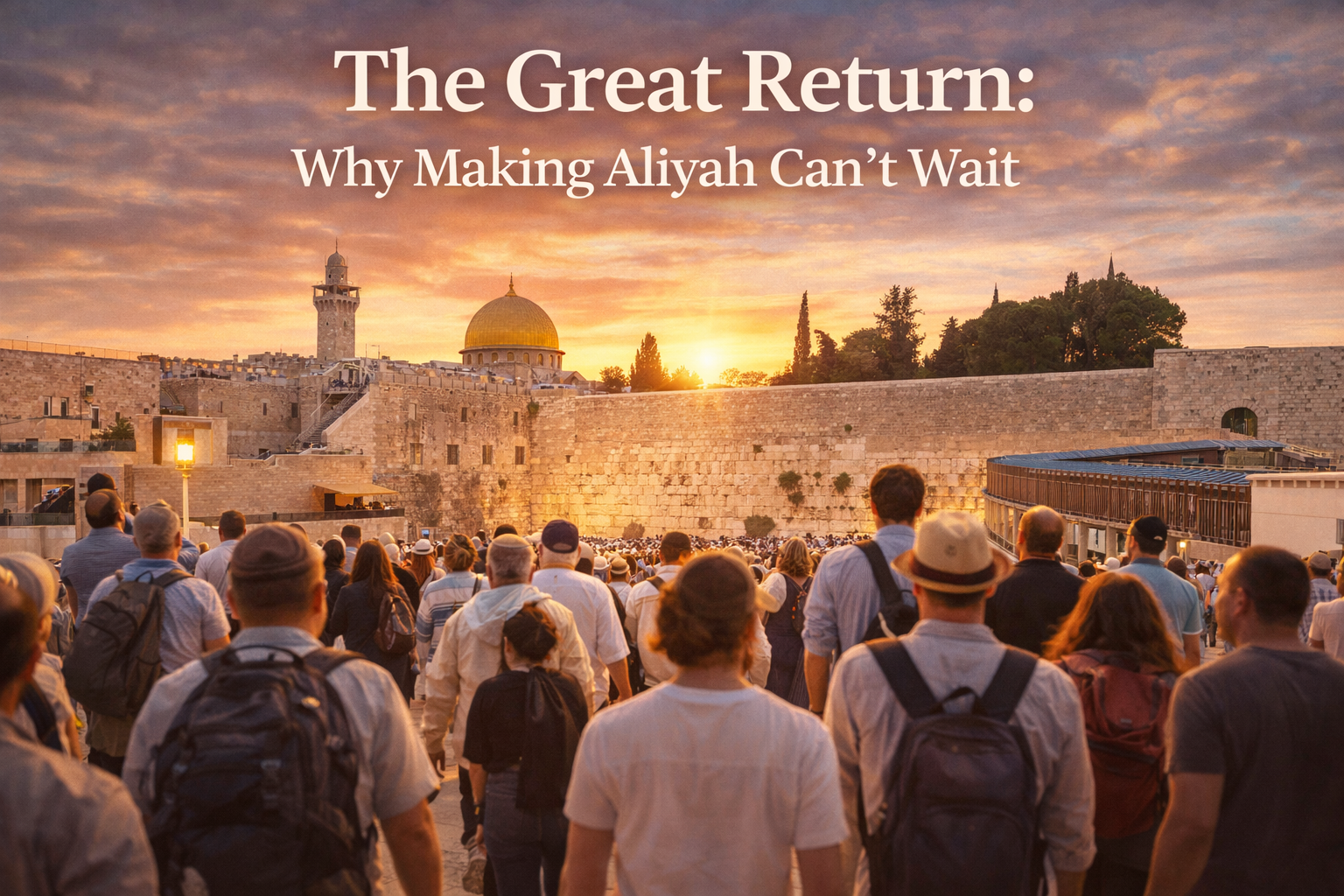
We are living through one of the most significant chapters in Jewish history: the Great Return. After two thousand years of exile, Jews from every corner of the earth are gathering in their ancestral homeland. This isn't metaphor or poetry—it's the demographic reality of our time. And if you're still in the Diaspora, you have a decision to make: will you be part of the Great Return, or will you watch from the sidelines?
The Ingathering in Numbers
The numbers tell a remarkable story. In 1948, approximately 600,000 Jews lived in Israel. Today, that number exceeds 7 million. Jews have come from Europe and America, from North Africa and Ethiopia, from the former Soviet Union and from Argentina. They've come from India and Yemen, from Iraq and Iran. Every Jewish community in the world has sent its children home.
This demographic transformation continues. Israel's Jewish population grows steadily each year through natural increase and aliyah. The center of gravity of world Jewry has shifted—more Jews now live in Israel than in any other single country. Within years, if current trends continue, a majority of the world's Jews will be Israeli.
Why Waiting Is Risky
Many people treat aliyah as something they'll do 'someday'—after the kids finish school, after they reach a certain career milestone, after they save enough money, after conditions are perfect. But waiting carries risks that are often underappreciated.
The older you are, the harder integration becomes. Languages are learned less easily. Careers are harder to restart. Social networks are harder to build. Children who come as teenagers often struggle more than those who come as young children. Every year you wait makes aliyah harder, not easier.
Global Instability Accelerates
Beyond personal timing, global conditions argue for urgency. Political instability is increasing in many Western democracies. Antisemitism is rising across the political spectrum. Economic disruptions seem more frequent and severe. Climate change threatens various regions differently.
Nobody can predict exactly how these trends will unfold, but betting on indefinite stability seems increasingly naive. Jews have historically been vulnerable during periods of instability. Making aliyah during relatively stable times is far preferable to making aliyah during crisis. The Great Return offers a path to security that waiting for perfect conditions does not.
The Absorption Infrastructure Won't Last Forever
Today's robust aliyah support infrastructure—free flights, absorption baskets, ulpan classes, job assistance—exists because major waves of aliyah required it. As aliyah from certain regions slows, there's no guarantee this infrastructure will be maintained at current levels.
Financial assistance, bureaucratic support, and community resources are available now because need exists now. Taking advantage of this support while it exists makes practical sense. Future generations might face a more 'normalized' immigration process without today's extraordinary assistance.
Building While You Can Build
Israel is still being built. Cities are developing. Communities are forming. Institutions are growing. Those who make aliyah now participate in this building process—they help shape the country rather than simply moving to a fully formed society.
There's something uniquely meaningful about being a builder rather than merely an inheritor. Today's olim help determine what Israeli society becomes. They influence development decisions, community character, institutional culture. They leave their mark in ways that become harder as the country matures and solidifies.
The Prophetic Dimension
Whether you're religious or secular, it's hard to ignore the prophetic resonance of the Great Return. Biblical prophets foresaw the ingathering of exiles—Jews returning from all directions to rebuild their homeland. We are living the fulfillment of ancient visions.
This prophetic dimension doesn't require religious belief to appreciate. It's simply remarkable that a scattered people maintained their identity for millennia and then returned to reconstitute their national life. Being part of this story—actively, not just as an observer—seems worth considerable sacrifice.
Don't Let Perfect Be the Enemy of Good
Waiting for the perfect moment guarantees you'll never move. There will always be reasons to delay—real, legitimate reasons that make sense in the moment. But those reasons rarely get resolved; they just get replaced by new reasons.
The Great Return isn't happening in some idealized perfect world—it's happening in our imperfect real one. Every oleh who came before you faced difficulties you won't face; you'll face difficulties they didn't. That's simply how it works. The question isn't whether conditions are perfect—they never will be. The question is whether you'll be part of the Great Return.
The answer to that question can't wait indefinitely. The Great Return is happening now. Your place in it awaits.